
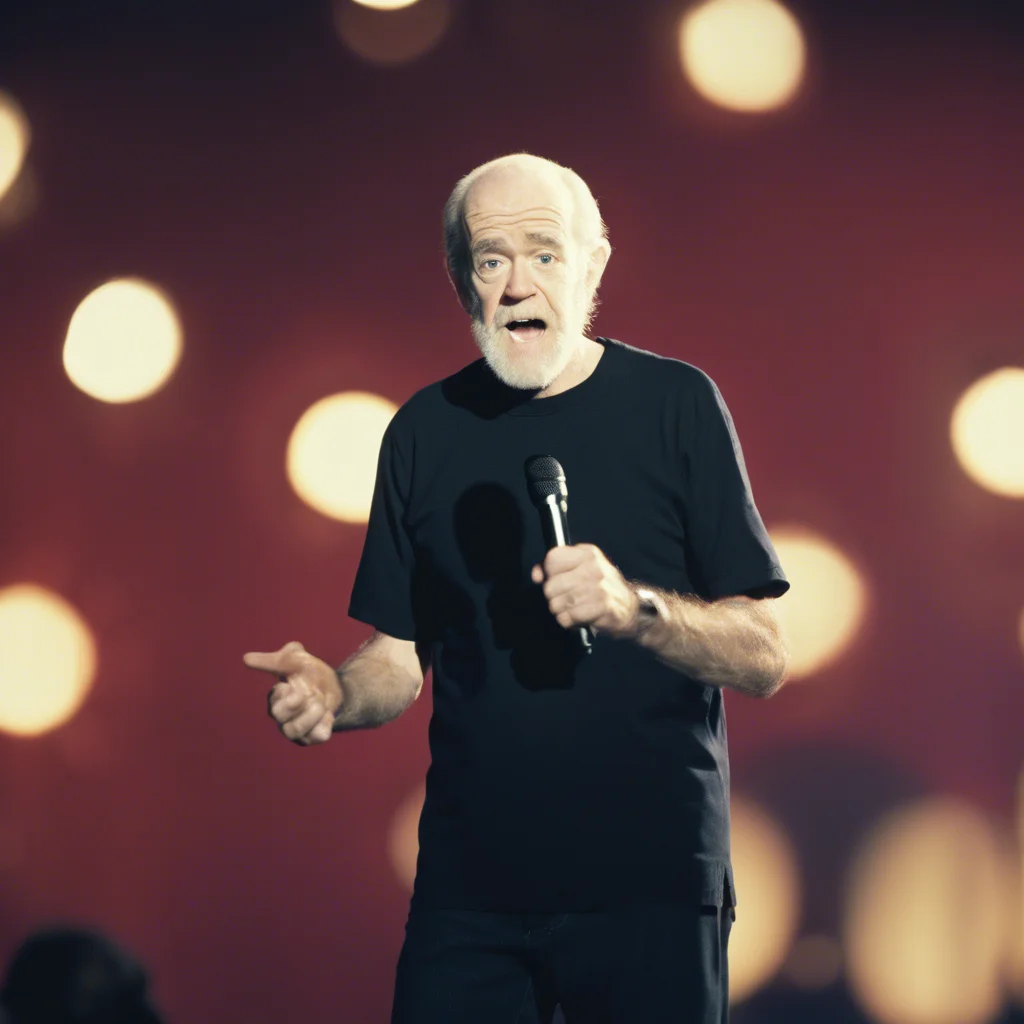
George Carlin’s influence on comedy is as profound as it is pervasive. Known for his sharp wit and unabashed social commentary, Carlin’s career spanned over five decades.
During this time, he evolved from a clean-cut comedian to a counterculture icon. His indelible mark on stand-up began in the 1960s and continued until his passing in 2008, reflecting a journey that both challenged and reshaped comedic boundaries.
He was prolific not just in his performances, but also across various media well beyond the traditional stand-up stage. With roles in films, television appearances, and authoring books, Carlin’s work drew admiration for its incisive observations on society and the human condition.
Carlin’s legacy endures, not merely in the laughter he generated, but in the critical thinking he inspired through his exploration of language, politics, and taboo topics.
Carlin was far more than a mere jester; he stood as a social critic who artfully intertwined comedy with philosophical insight.
His famous “Seven Dirty Words” sketch not only challenged the status quo but also led to a historic U.S. Supreme Court case affecting the regulation of broadcast material.
Today, Carlin’s body of work remains a testament to the power of humor as a tool for reflection, resistance, and change.
Early Life and Career Beginnings
George Carlin’s journey into comedy began with his early years in Manhattan, and his initial foray into creative work came through radio and partnership with Jack Burns.
Formative Years
Born on May 12, 1937, in Manhattan’s Morningside Heights, George Denis Patrick Carlin grew up as a keen observer of everyday life. The bustling New York atmosphere and its diverse pool of characters set the stage for his profound reflections in comedy.
He attended high school, but later left, opting instead to chart his own course. Carlin joined the Air Force but maintained his unruly streak, resulting in multiple infractions.
Early Creative Ventures
Carlin’s early career had him spinning records as a disc jockey in the Air Force, enabling him to hone his gift for gabbing. Post service, he transitioned to a professional radio career that saw him working at stations such as KJOE in Shreveport and WEZE in Boston.
However, it wasn’t until he met Jack Burns in Fort Worth, Texas, that his comedic path became clear. Together, they forged a duo that delivered a blend of timing and wit, which later evolved into Carlin’s solo stand-up career, launching him towards the bright lights of Las Vegas and beyond.
Rise to Fame
George Carlin’s transformation from a traditional stand-up comedian to a counterculture icon was marked by a bold and boundary-pushing style. His unique voice in comedy combined sharp social commentary with an irreverent take on language and society.
Stand-Up Breakthrough
Carlin’s stand-up career gained significant momentum in the 1960s when he began making appearances on television variety shows. The Tonight Show with Johnny Carson became a particularly important venue for him, helping to introduce his comedy to a nationwide audience.
It wasn’t long before his acerbic wit and insightful humor granted him headliner status in the comedy circuit.
Television and Film Appearances
Beyond stand-up, Carlin expanded his reach by stepping into television and film. He hosted the first episode of Saturday Night Live in 1975, cementing his role in the fabric of American comedy.
Further appearances on various HBO specials continued to elevate his fame, showcasing his evolution as a comedian unafraid to tackle controversial topics. His television and film appearances became a testament to his versatility and ability to connect with audiences across multiple platforms.
Related Posts
Richard Pryor: The Life And Comedy Of An Icon
Laugh With The 10 Greatest Comedians From The 1970s
Relive the Life and Laughs of Steve Martin: the Jerk
The Amazing Life of Phyllis Diller: The Queen of Comedy
Can We Talk?: An Ode to Joan Rivers and her comedy
Artistic Evolution and Controversy
George Carlin’s career was marked by a significant shift in his comedy style which took on more controversial subjects, leading to historical legal battles that shaped the conversation on censorship and free speech within American culture.
Shift in Comedy Style
In the late 1960s, Carlin transformed from a conventional stand-up comedian into a counter-cultural figure. He abandoned the clean-cut image and began to incorporate political commentary, religion, and the English language into his routine.
Carlin’s brand of humor became synonymous with counterculture comedians and he often critiqued American society, expressing his views through a mix of satire and dark comedy.
Legal and Social Battles
Carlin’s most infamous routine, “Seven Dirty Words,” sparked one of the most notable First Amendment cases in U.S. history.
He was arrested for disturbing the peace when he performed the act live in Milwaukee in 1972. This incident led to the F.C.C. v. Pacifica Foundation case, where the U.S. Supreme Court upheld the government’s power to regulate indecent material on public airwaves.
This Supreme Court Ruling was a defining moment for broadcasting, comedic art, and the constraints imposed by American legal standards on their content.
Carlin’s unabashed skewering of taboo topics and his legal entanglements cemented his position as a pivotal figure in discussions about American culture, censorship, and the dynamics of free expression.
Major Works and Achievements
George Carlin’s prolific career spanned a range of comedic works, including a significant discography and acclaimed publications, while his distinctive wit and incisive social critique earned him numerous recognitions and awards.
Discography and Publications
Throughout his career, Carlin released more than 20 comedy albums, contributing to his status as a groundbreaking figure in stand-up comedy. Noteworthy among these was his debut album, “Take-Offs and Put-Ons,” which set the tone for his comedic style.
- Class Clown – Known for the famous “Seven Dirty Words” routine.
- Occupation: Foole – Featured a blend of humor and social commentary.
- It’s Bad for Ya – His sharp satire remained evident in his final album.
As an author, he penned books that offered a deeper look into his philosophy and comedic vision. Two significant titles that demonstrate his writing prowess include:
- Brain Droppings – A compilation of thoughts, musings, and essays showcasing Carlin’s unique perspective on a variety of subjects.
- Last Words – A posthumous memoir that presents an introspective look at his life and career.
Awards and Recognition
Carlin’s excellence was recognized with several Grammy Awards over the years. His witty repartee and innovative material earned him:
- Four Grammy Awards for Best Comedy Album for albums such as “FM & AM,” “Jammin’ in New York,” and his final album “It’s Bad for Ya.”
Additionally, he was posthumously awarded the prestigious Mark Twain Prize for American Humor, which honors individuals who have had an impact on American society in ways similar to the distinguished 19th-century novelist and essayist Mark Twain.
Personal Life and Legacy
George Carlin’s personal life was as rich and multifaceted as his comedy. His family roots, influential figures in his life, and the legacy he left behind paint a comprehensive picture of who he was off-stage.
Family
Carlin was born to Patrick John Carlin, an advertising manager, and Mary Carlin, a secretary. He forged his own family ties when he married Brenda Hosbrook in 1961; they had a daughter named Kelly.
Following Brenda’s passing, George found love again with Sally Wade, with whom he shared the last decade of his life.
Influences
Carlin’s razor-sharp wit and critical eye can be traced back to the influence of Lenny Bruce, a pioneer in stand-up comedy who was renowned for his open, freestyle, and critical form of comedy.
Inspired by Bruce’s fearless commentary on social issues, Carlin crafted his own brand of provocative humor that challenged societal norms.
Death and Posthumous Impact
Carlin succumbed to heart failure on June 22, 2008. His death left an indelible void in comedy.
However, his legacy endures through a plethora of recordings and books, and comedians today still cite him as a major influence in their work. His unique philosophy on life’s absurdities continues to resonate, cementing his status as one of the most influential stand-up comedians who ever graced the stage.
Multimedia Impact and Presence
George Carlin’s influence in multimedia is significant, marked by his appearances in various television series and specials, as well as his role as a producer. His work remains relevant and continues to resonate in contemporary culture.
Television Series and Specials
Carlin’s television journey included both acting and producing. He starred in The George Carlin Show, giving him a new platform to showcase his comedic talent.
He also lent his voice and personality to the children’s series Shining Time Station, demonstrating his range beyond adult comedy.
Aside from series, Carlin’s impact was hugely amplified through his HBO Specials. These performances solidified his position as a trailblazer in stand-up comedy and were often seen as events not to be missed.
Enduring Relevance
Carlin’s content was often aired on networks like Comedy Central. This played a role in continually broadcasting his material to new and loyal audiences alike.
His comedic perspective and sharp social commentary left an indelible mark on the network and its viewers.
- Comedy Central: Frequently features Carlin’s work, ensuring that his comedic voice remains influential and accessible to a broad audience.


