
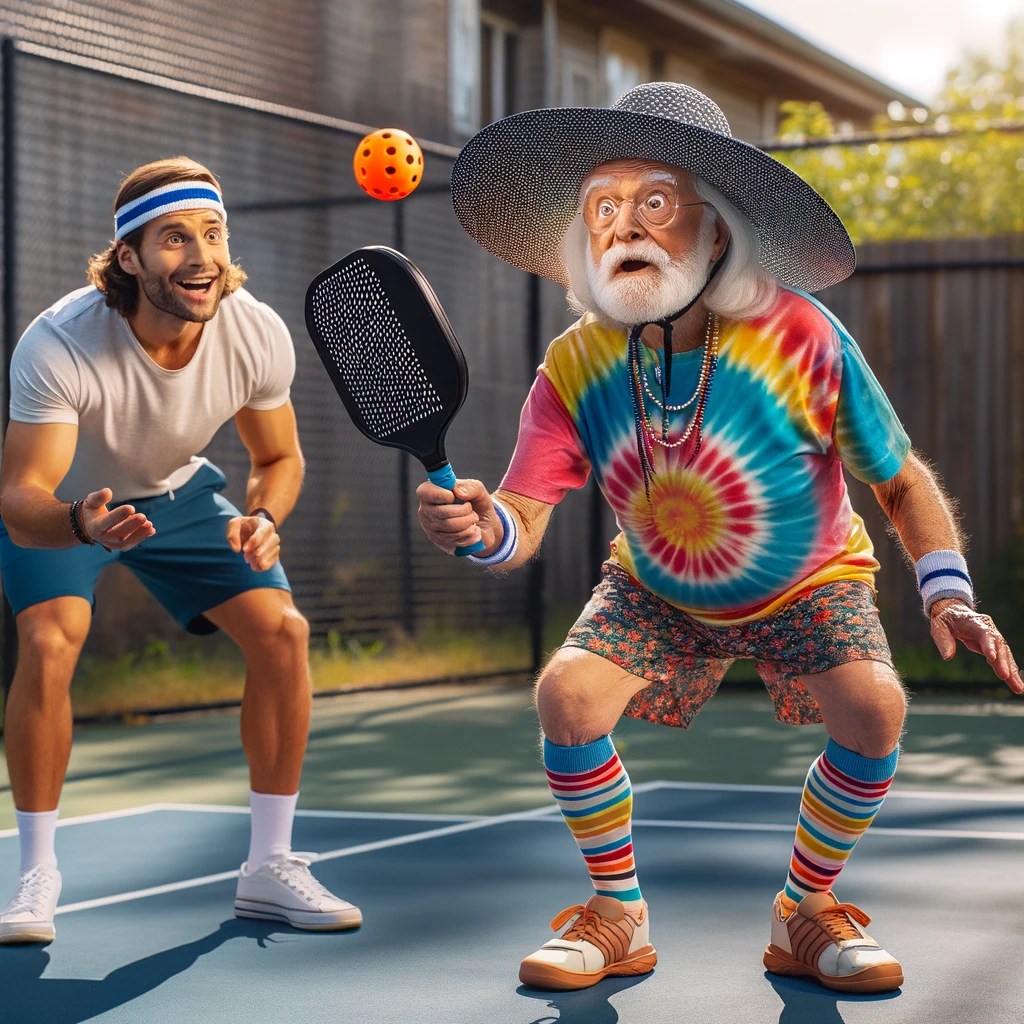
Pickleball is a paddle sport that combines elements of badminton, tennis, and table tennis. It has gained popularity due to its beginner-friendly nature and the social atmosphere it fosters. The game can be quickly learned by players of all ages, making it a favorite pastime for families and friends seeking both fun and fitness.
Its rules are simple and the equipment required is minimal, allowing newcomers to easily join the thousands who have made pickleball part of their regular exercise and recreation.
As one of the fastest-growing sports in North America, pickleball is being discovered by many as an enjoyable way to stay active. Courts are popping up in local communities around the country and equipment like paddles and balls are readily available at sports retailers.
For those looking to learn pickleball, the journey begins with understanding the basic rules and obtaining the right gear. One should equip themselves with sport-specific shoes for stability and traction on the court, a paddle that suits their grip and playing style, and outdoor or indoor pickleball balls depending on where they plan to play.
The game’s appeal lies in its accessibility and the relatively low intensity of play, which makes it suitable for a wide range of fitness levels. Additionally, it provides a great opportunity to engage in a competitive sport while maintaining a light-hearted and social ambiance.
Starting to play merely involves finding a nearby court and mastering a few basic strokes. With practice, anyone can quickly move from a novice to a seasoned player, enjoying the camaraderie and challenge that pickleball offers.
Understanding the Basics of Pickleball
To dive into the world of pickleball, one must grasp its history, the necessary equipment, and the fundamental rules. These aspects provide a comprehensive foundation for beginners eager to step onto the pickleball court and enjoy this engaging paddle sport.
History and Evolution of the Sport
Pickleball, a sport that marries elements of tennis, badminton, and ping-pong, was devised in the 1960s as a child-friendly game. However, it quickly gained traction among adults for its accessibility and engaging playstyle. As highlighted by Tennis magazine in the 1970s, pickleball’s popularity has surged, evolving with specialized equipment and a distinct culture.
Equipment Essentials
Every pickleball player needs a few key items to get started:
- Pickleball Paddle: Usually made from wood, composite, or graphite, these are lighter than tennis racquets but larger than ping-pong paddles.
- Ball: A perforated, plastic ball, resembling a whiffle ball, but with slightly different construction to suit pickleball play.
- Net: The pickleball net is similar in height to a tennis net but is tailored for a pickleball court’s dimensions.
Rules and Regulations
Several key rules dictate the flow of a pickleball game:
- Scoring System: Games are typically played to 11 points, and a player must win by 2 points. Points can only be scored by the serving team.
- Double Bounce Rule: After the ball is served, each side must let it bounce once before volleys are allowed.
- Non-Volley Zone (a.k.a. the Kitchen): Players cannot volley the ball (hit it out of the air) while standing in this 7-foot zone in front of the net.
- Out of Bounds: Balls that land outside of the court’s boundary lines are out of play. The dimensions of the court matter significantly in regards to where the ball can be hit and scored.
Getting Started with Pickleball
Pickleball is an inclusive and exciting sport that anyone can enjoy with proper equipment and basic skills. Whether you’re playing for fun or considering more competitive play, knowing what equipment to choose and how to handle your paddle lays the foundation for a great experience on the court.
Choosing the Right Equipment
Paddles: There are three main types of paddles to consider: wood, composite, and graphite. Wooden paddles are usually the heaviest and most affordable, making them a sturdy choice for beginners. However, lightweight paddles made of composite or graphite materials give players better control and are easier on the arm.
- Composite Paddle: Versatile and available in various weights and grip sizes, these are great for players looking to balance power and control.
- Graphite Paddle: Known for their responsiveness, these paddles allow for precise shots and are preferred by more experienced players.
Shoes: Proper footwear is crucial in pickleball to prevent injury and enhance performance. Unlike running shoes, court shoes are designed to provide the lateral support needed during the quick side-to-side movements in pickleball.
Balls: Pickleball balls are unique, with holes through them, much like wiffle balls. Outdoor balls have smaller, harder holes while indoor balls are softer and slightly larger.
Mastering the Grip and Paddle Control
Grip Size: Finding the right grip size for your paddle is essential; too large and you risk losing control, too small and you could incur wrist strain. A common way to find a comfortable grip size is by measuring from the tip of your ring finger to the middle crease of your palm.
- Overgrip: Some players add an overgrip to the handle for additional comfort and moisture absorption, which can be especially useful in warmer climates or during intense play.
Paddle Control: Practice makes perfect when it comes to paddle control. Beginning players should focus on where to position the paddle to best meet the ball for various types of shots. Generally, keeping the paddle out in front and the wrist firm will lead to more consistent hits.
Developing Your Skills
To excel at pickleball, one needs to focus on mastering technical skills and understanding the nuances of gameplay. Starting with the serve and building a strategic approach to both offensive and defensive play are essential steps on the path to proficiency.
Serving and Scoring
To initiate play, one must serve the ball underhand, ensuring the paddle is below the waist when it strikes the ball. A successful serve lands diagonally across the court in the opponent’s service box. Scoring in pickleball applies only when serving; thus, the focus should be on a precise and strategic serve that can set the tone for the remainder of the play.
- Underhand Serve: The serve must be hit underhand with the paddle below the waist, and the ball must be struck in an upward arc.
- Scoring: Points are scored by the serving side only and games are typically played to 11, win by 2.
Offensive and Defensive Shots
A balanced pickleball strategy includes a mix of offensive and defensive shots. An effective offensive shot, like a forehand or backhand drive, targets the opponent’s weaknesses, while a defensive shot, such as a dink or lob, can neutralize the opponent’s advantage.
- Forehand/Backhand: Utilize your forehand or backhand to maintain a strong baseline game and exert pressure.
- Volley: To keep opponents off-balance, mix in volleys by hitting the ball before it bounces.
- Dink: A soft, strategic shot aimed just over the net to limit the opponent’s ability to attack.
- Doubles Strategy: In doubles, communication and positioning are key, one player typically focuses on setting up shots, while the other looks for opportunities to attack.
Exploring Advanced Techniques
Advancing in pickleball involves mastering strategic plays and precise shot execution. Whether one is playing singles or doubles, the key lies in honing advanced techniques to control the game and exert power where it matters most.
Implementing Strategies for Singles and Doubles Play
In singles play, an experienced player uses strategies that maximize court coverage and stamina. One should focus on delivering deep serves and returns to move the opponent back, allowing oneself to take control of the net. To gain the upper hand, one should aim to hit shots to the opponent’s weak side, often targeting the backhand or pushing them to move laterally.
In doubles play, teamwork is crucial. Players should establish a strategy to maintain the offensive position by controlling the non-volley zone. A common tactic includes the “stacking” formation where partners align in a way to ensure both can utilize their forehand, which is generally more powerful and has a larger sweet spot.
Refining Shot Selection and Court Positioning
Strategic shot selection and court positioning are pivotal for an experienced player. They must refine their ability to quickly decide when to employ a soft, controlled shot over a hard drive. The aim is to keep the ball low to force an upward return, opening opportunities to attack.
- Control is demonstrated by consistently hitting the ball on the sweet spot of the paddle’s face.
- Power is utilized selectively, knowing that overpowering every shot can lead to errors.
Court positioning involves anticipating the opponent’s next move and positioning oneself to cover the most strategic area of the court. It can dictate the flow of the game, especially in the non-volley zone, where shots like the dink and volley dominate.
Joining the Pickleball Community
Joining the pickleball community can be a delightful way to engage in physical activity and connect with like-minded individuals. The process involves locating places to play and tapping into online resources for information and interaction.
Finding Local Courts and Clubs
One can start by contacting the USA Pickleball Association (USAPA) to find registered pickleball clubs and communities in the area.
The USAPA offers a comprehensive list of locations where courts are available, whether they’re indoors or outdoors.
Many tennis courts have been adapted for pickleball play, as the sport shares similarities with tennis and badminton.
- To locate local pickleball courts, visit the USAPA’s Places to Play directory.
- Check community centers and public parks, as they often have pickleball lines painted on multi-use courts.
Engaging with Online Resources and Social Media
Online platforms like Facebook groups dedicated to pickleball can serve as a social nexus for enthusiasts looking to join the pickleball community.
Here, individuals can find updates on local pickleball events. They can also connect with other players and learn tips and strategies for improving their game.
- Look for local pickleball Facebook groups where members share information about meetups and social events.
- Use social media to follow pickleball influencers. They provide instructional content to help with exercise and fitness improvement specific to the sport.


