
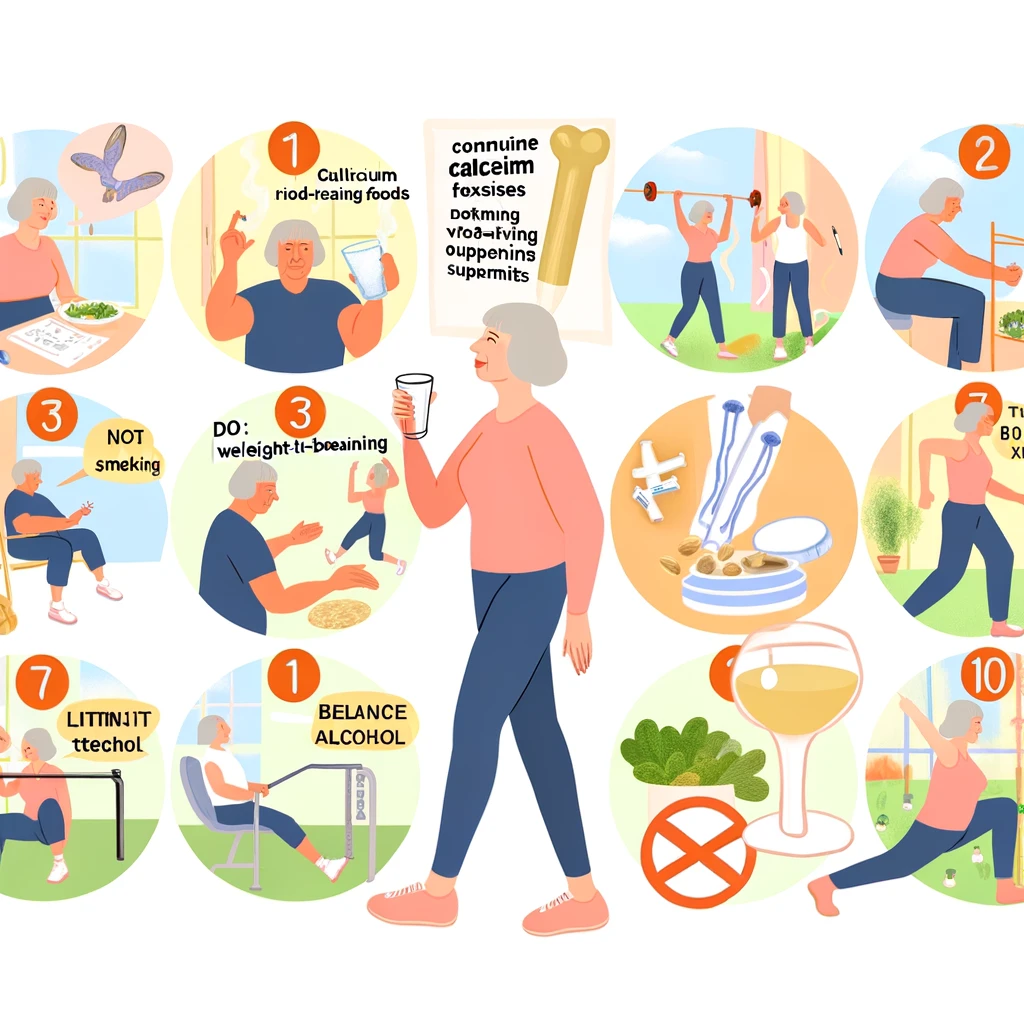
Osteoporosis is a condition that thins and weakens bones, making them fragile and more likely to break. It’s a concern we may face as we age, affecting both men and women, though it’s more common in older women.
However, we don’t have to accept this as an inevitable part of aging. There are effective strategies we can employ to help prevent its onset.
Maintaining strong bones well into our later years is not only possible, it’s something we can actively work toward starting today.
We are fortunate to have a growing body of research that sheds light on factors affecting bone density and how we can modify our lifestyle to keep our skeletons robust.
Elements such as diet and physical activity play pivotal roles in bone health. For instance, ensuring we get enough calcium and vitamin D can have a significant impact on maintaining bone strength.
Similarly, engaging in regular weight-bearing exercises is key since our bones adapt and become stronger when forced to bear weight.
Splitting text up into at most two sentences per paragraph will make it easier to read.
Beyond nutrition and exercise, there are other considerations and habits we can adopt to protect our bone health.
For example, understanding how certain medications and other medical conditions can influence our risk for osteoporosis enables us to make informed choices about our healthcare.
Taking steps to prevent falls, reduce alcohol intake, and quit smoking are all measures that cumulatively contribute to a comprehensive approach to preventing osteoporosis.
By giving our bones the care and attention they deserve, we can fortify them for the future, ensuring they support us as we embrace the fullness of life.
Essential Nutrients for Bone Health
Bone health is critical for keeping our bodies strong as we age. To prevent osteoporosis, it’s crucial that we focus on two key nutrients: calcium and vitamin D.
Calcium Essentials
For strong bones, ensuring adequate calcium intake is non-negotiable. Adults need about 1,000 milligrams per day, and this requirement increases to 1,200 milligrams daily for women over 50 and men over 70.
We can meet our calcium needs by incorporating dairy products, leafy greens, and calcium-fortified foods into our diets.
Remember, our bodies can’t produce calcium, so it’s important that we get enough from what we eat.
- Dairy products: milk, cheese, yogurt
- Leafy greens: broccoli, kale
- Fortified foods: orange juice, cereals
Vitamin D for Absorption
Vitamin D is essential for calcium absorption in our bones. Without it, all the calcium we consume wouldn’t do us much good.
Adults require about 600 IU (international units) of vitamin D per day, and this goes up to 800 IU for those over 70.
We can get vitamin D from a few foods, our body’s natural production when exposed to sunlight, and supplements if necessary.
- Foods: fatty fish, egg yolks, fortified milk
- Sunlight: just 10-15 minutes a day can be enough
- Supplements: when diet and sunlight aren’t enough
Making sure we get enough of these nutrients can be a simple yet effective way to maintain bone health and prevent osteoporosis. Let’s keep our skeleton strong by giving it the nutrients it needs!
Exercise for Bone Strength
As we consider our bone health, it’s crucial to focus on specific exercises that enhance bone density. By incorporating targeted physical activities, we can effectively fortify our bones and reduce the risk of osteoporosis.
Weight-Bearing Activities
Weight-bearing exercises are a cornerstone in building and maintaining bone strength. These activities force our bodies to work against gravity, which in turn stimulates new bone growth.
- Walking: Simple yet effective, a brisk walk can bolster bone health in your hips and spine.
- Dancing: Grooving to music is not just fun; it’s a dynamic way to strengthen your skeleton.
- Tennis: The lateral movements in tennis are excellent for boosting bone density in your arms and legs.
Learn more about the variety of weight-bearing exercises at Healthline.
Muscle and Bone Reinforcement
Muscle-strengthening activities work hand in hand with weight-bearing exercises to reinforce our bones. This subset of exercise, known as resistance training, applies tension to muscle fibers, which also benefits our skeletal structure.
- Lifting Weights: Utilize free weights or machines to enhance upper back strength and improve bone health.
- Bodyweight Exercises: Push-ups and planks can be done almost anywhere and engage multiple muscle groups to support bone reinforcements.
Incorporating these muscle-strengthening routines can provide a solid foundation for bone health. For a detailed guide on these exercises, visit Mayo Clinic.
Lifestyle Choices Impacting Bones
We have more control over our bone health than we might think. Our everyday choices can significantly impact our bone density and strength, especially as we age. Let’s explore how our lifestyle can either be a boon or bane to our precious bones.
Smoking and Bone Health
Avoid Smoking: We’ve all heard that smoking is harmful, but did you know it can also weaken your bones?
Smoking interferes with the balance of hormones in our body, including estrogen, which is essential for healthy bones. By choosing not to smoke, we support our bone health and prevent potential density loss.
Alcohol Limits for Bone Preservation
Limit Alcohol Consumption: Moderation is key when it comes to alcohol. Having too much can hinder our body’s ability to absorb calcium and vitamin D – two critical nutrients for bone strength.
It’s wise for us to stay within the recommendations of no more than one drink per day for women and two for men.
Weight Management
Maintain a Healthy Weight: Carrying too much or too little weight can harm our bones.
Ideal weight management includes a balanced diet and regular exercise, which not only supports our overall health but also promotes the development and maintenance of strong bones.
Keeping our weight in check is a solid step towards osteoporosis prevention.
Nutritional Balance and Fall Prevention
The right blend of nutrients can strengthen our bones, while creating a safe environment minimizes fall risks. Let’s explore how we can support bone health through diet and reduce our chance of falls through practical measures.
Dietary Balance for Bone Maintenance
Balanced Diet: For robust bones, we include a combination of foods in our meals. We focus on:
- Calcium: Essential for bone structure. Our go-to sources are dairy products, leafy greens, and calcium-fortified foods.
- Vitamin D: Increases calcium absorption. We find it in fatty fish, egg yolks, and vitamin D-fortified foods.
- Protein: Critical for bone repair. Lean meats, legumes, and nuts are excellent sources. Adequate protein intake contributes to bone density and strength.
Example: A breakfast for bone health could include yogurt with almonds and fortified orange juice, combining calcium, protein, and vitamin D.
Strategies to Reduce Fall Risk
Home Safety Adjustments: We make our living spaces safer by:
- Securing rugs
- Ensuring adequate lighting
- Installing grab bars in key areas
Exercise: Regular, weight-bearing and balance exercises enhance our strength and coordination, which could include walking, aerobics, or Tai Chi. Strong muscles and good balance can significantly help us avoid falls or minimize injury.
Monitoring Bone Health
When it comes to preventing osteoporosis, keeping a close watch on our bone health is crucial. We can do this through Regular Bone Density Testing, which measures the strength and density of our bones.
Typically, these tests focus on key areas prone to fracture, like the hip and spine. They are recommended for individuals over the age of 65 or for those with increased risk factors.
We should make arrangements for these tests as advised by our healthcare provider. Usually, we need to do this every one to two years. The frequency can vary based on our individual health status and the results of previous tests.
Here’s a quick overview of what we can expect:
- Bone Mineral Density (BMD) Tests: This test often uses a technology known as dual-energy X-ray absorptiometry (DEXA) to get detailed images of our bones.
- T-score Interpretation: Results are given as a ‘T-score’, which compares our bone density to that of a healthy young adult. A T-score of -1.0 or above is considered normal, while scores below indicate lower bone density.
- Risk Factor Assessment: Alongside these tests, we should assess other risk factors such as family history, dietary habits, and lifestyle choices. Such factors can play a significant role in our bone health.
By staying informed on our bone density and risk factors, we can take proactive measures to maintain bone strength. Incorporating weight-bearing exercises, ensuring a diet rich in calcium and vitamin D, and avoiding smoking or excessive alcohol can positively impact our bone density over time. Let’s ensure we schedule regular check-ups and advocate for our bone health.
Osteoporosis is a condition that thins and weakens bones, making them fragile and more likely to break. It’s a concern we may face as we age, affecting both men and women, though it’s more common in older women.
However, we don’t have to accept this as an inevitable part of aging. There are effective strategies we can employ to help prevent its onset.
Maintaining strong bones well into our later years is not only possible, it’s something we can actively work toward starting today.
We are fortunate to have a growing body of research that sheds light on factors affecting bone density and how we can modify our lifestyle to keep our skeletons robust.
Elements such as diet and physical activity play pivotal roles in bone health. For instance, ensuring we get enough calcium and vitamin D can have a significant impact on maintaining bone strength.
Similarly, engaging in regular weight-bearing exercises is key since our bones adapt and become stronger when forced to bear weight.
Splitting text up into at most two sentences per paragraph will make it easier to read.
Beyond nutrition and exercise, there are other considerations and habits we can adopt to protect our bone health.
For example, understanding how certain medications and other medical conditions can influence our risk for osteoporosis enables us to make informed choices about our healthcare.
Taking steps to prevent falls, reduce alcohol intake, and quit smoking are all measures that cumulatively contribute to a comprehensive approach to preventing osteoporosis.
By giving our bones the care and attention they deserve, we can fortify them for the future, ensuring they support us as we embrace the fullness of life.
Essential Nutrients for Bone Health
Bone health is critical for keeping our bodies strong as we age. To prevent osteoporosis, it’s crucial that we focus on two key nutrients: calcium and vitamin D.
Calcium Essentials
For strong bones, ensuring adequate calcium intake is non-negotiable. Adults need about 1,000 milligrams per day, and this requirement increases to 1,200 milligrams daily for women over 50 and men over 70.
We can meet our calcium needs by incorporating dairy products, leafy greens, and calcium-fortified foods into our diets.
Remember, our bodies can’t produce calcium, so it’s important that we get enough from what we eat.
- Dairy products: milk, cheese, yogurt
- Leafy greens: broccoli, kale
- Fortified foods: orange juice, cereals
Vitamin D for Absorption
Vitamin D is essential for calcium absorption in our bones. Without it, all the calcium we consume wouldn’t do us much good.
Adults require about 600 IU (international units) of vitamin D per day, and this goes up to 800 IU for those over 70.
We can get vitamin D from a few foods, our body’s natural production when exposed to sunlight, and supplements if necessary.
- Foods: fatty fish, egg yolks, fortified milk
- Sunlight: just 10-15 minutes a day can be enough
- Supplements: when diet and sunlight aren’t enough
Making sure we get enough of these nutrients can be a simple yet effective way to maintain bone health and prevent osteoporosis. Let’s keep our skeleton strong by giving it the nutrients it needs!
Exercise for Bone Strength
As we consider our bone health, it’s crucial to focus on specific exercises that enhance bone density. By incorporating targeted physical activities, we can effectively fortify our bones and reduce the risk of osteoporosis.
Weight-Bearing Activities
Weight-bearing exercises are a cornerstone in building and maintaining bone strength. These activities force our bodies to work against gravity, which in turn stimulates new bone growth.
- Walking: Simple yet effective, a brisk walk can bolster bone health in your hips and spine.
- Dancing: Grooving to music is not just fun; it’s a dynamic way to strengthen your skeleton.
- Tennis: The lateral movements in tennis are excellent for boosting bone density in your arms and legs.
Learn more about the variety of weight-bearing exercises at Healthline.
Muscle and Bone Reinforcement
Muscle-strengthening activities work hand in hand with weight-bearing exercises to reinforce our bones. This subset of exercise, known as resistance training, applies tension to muscle fibers, which also benefits our skeletal structure.
- Lifting Weights: Utilize free weights or machines to enhance upper back strength and improve bone health.
- Bodyweight Exercises: Push-ups and planks can be done almost anywhere and engage multiple muscle groups to support bone reinforcements.
Incorporating these muscle-strengthening routines can provide a solid foundation for bone health. For a detailed guide on these exercises, visit Mayo Clinic.
Lifestyle Choices Impacting Bones
We have more control over our bone health than we might think. Our everyday choices can significantly impact our bone density and strength, especially as we age. Let’s explore how our lifestyle can either be a boon or bane to our precious bones.
Smoking and Bone Health
Avoid Smoking: We’ve all heard that smoking is harmful, but did you know it can also weaken your bones?
Smoking interferes with the balance of hormones in our body, including estrogen, which is essential for healthy bones. By choosing not to smoke, we support our bone health and prevent potential density loss.
Alcohol Limits for Bone Preservation
Limit Alcohol Consumption: Moderation is key when it comes to alcohol. Having too much can hinder our body’s ability to absorb calcium and vitamin D – two critical nutrients for bone strength.
It’s wise for us to stay within the recommendations of no more than one drink per day for women and two for men.
Weight Management
Maintain a Healthy Weight: Carrying too much or too little weight can harm our bones.
Ideal weight management includes a balanced diet and regular exercise, which not only supports our overall health but also promotes the development and maintenance of strong bones.
Keeping our weight in check is a solid step towards osteoporosis prevention.
Nutritional Balance and Fall Prevention
The right blend of nutrients can strengthen our bones, while creating a safe environment minimizes fall risks. Let’s explore how we can support bone health through diet and reduce our chance of falls through practical measures.
Dietary Balance for Bone Maintenance
Balanced Diet: For robust bones, we include a combination of foods in our meals. We focus on:
- Calcium: Essential for bone structure. Our go-to sources are dairy products, leafy greens, and calcium-fortified foods.
- Vitamin D: Increases calcium absorption. We find it in fatty fish, egg yolks, and vitamin D-fortified foods.
- Protein: Critical for bone repair. Lean meats, legumes, and nuts are excellent sources. Adequate protein intake contributes to bone density and strength.
Example: A breakfast for bone health could include yogurt with almonds and fortified orange juice, combining calcium, protein, and vitamin D.
Strategies to Reduce Fall Risk
Home Safety Adjustments: We make our living spaces safer by:
- Securing rugs
- Ensuring adequate lighting
- Installing grab bars in key areas
Exercise: Regular, weight-bearing and balance exercises enhance our strength and coordination, which could include walking, aerobics, or Tai Chi. Strong muscles and good balance can significantly help us avoid falls or minimize injury.
Monitoring Bone Health
When it comes to preventing osteoporosis, keeping a close watch on our bone health is crucial. We can do this through Regular Bone Density Testing, which measures the strength and density of our bones.
Typically, these tests focus on key areas prone to fracture, like the hip and spine. They are recommended for individuals over the age of 65 or for those with increased risk factors.
We should make arrangements for these tests as advised by our healthcare provider. Usually, we need to do this every one to two years. The frequency can vary based on our individual health status and the results of previous tests.
Here’s a quick overview of what we can expect:
- Bone Mineral Density (BMD) Tests: This test often uses a technology known as dual-energy X-ray absorptiometry (DEXA) to get detailed images of our bones.
- T-score Interpretation: Results are given as a ‘T-score’, which compares our bone density to that of a healthy young adult. A T-score of -1.0 or above is considered normal, while scores below indicate lower bone density.
- Risk Factor Assessment: Alongside these tests, we should assess other risk factors such as family history, dietary habits, and lifestyle choices. Such factors can play a significant role in our bone health.
By staying informed on our bone density and risk factors, we can take proactive measures to maintain bone strength. Incorporating weight-bearing exercises, ensuring a diet rich in calcium and vitamin D, and avoiding smoking or excessive alcohol can positively impact our bone density over time. Let’s ensure we schedule regular check-ups and advocate for our bone health.


