
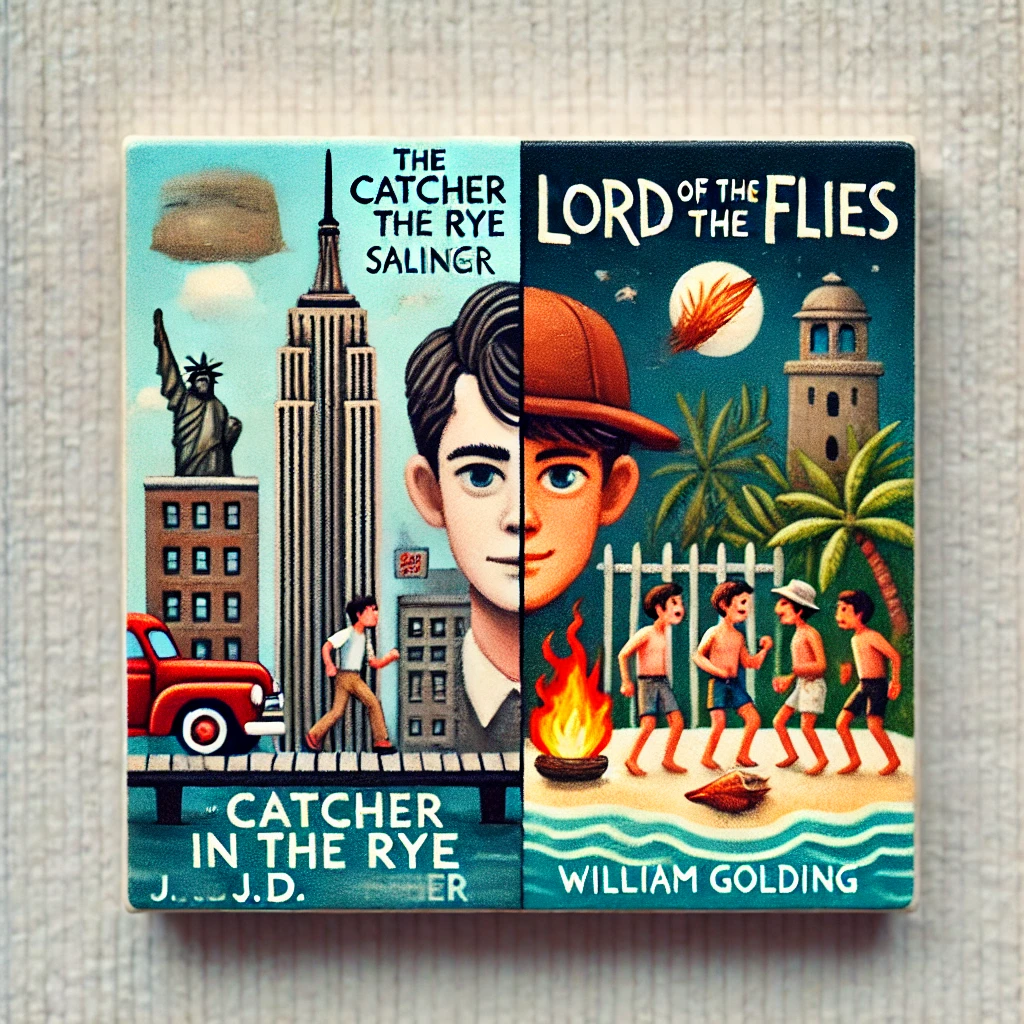
The Baby Boomer generation grew up reading some of the most influential literature of the 20th century. Among these, “The Catcher in the Rye” by J.D. Salinger and “Lord of the Flies” by William Golding stand out as seminal works that shaped the views and thoughts of many young readers. Both novels offer deep insights into human nature, society, and the struggles of growing up, yet they do so in strikingly different ways.
Themes of Alienation and Society
Both “The Catcher in the Rye” and “Lord of the Flies” explore themes of alienation and the role of society in shaping individuals. However, the contexts in which these themes are presented are vastly different.
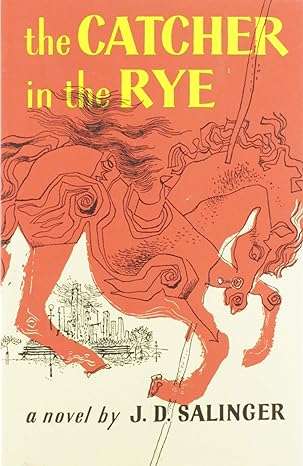
In “The Catcher in the Rye,” Holden Caulfield feels isolated and disconnected in the bustling city of New York. His sense of alienation is personal and internal, driven by his disdain for the “phoniness” he perceives in the adult world. This sense of being an outsider is a central theme that resonates with many readers who have experienced similar feelings during their teenage years.
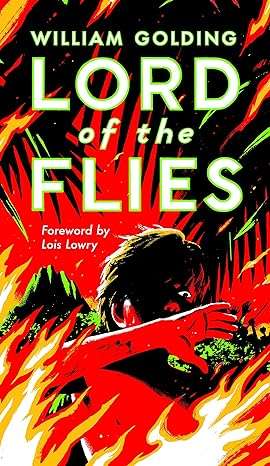
In contrast, “Lord of the Flies” depicts a group of boys stranded on a deserted island, where their initial attempts at creating a civilized society quickly devolve into chaos and savagery. The alienation here is more collective, as the boys are cut off from the norms and rules of their former lives. This setting allows Golding to explore the darker aspects of human nature and the thin veneer of civilization that can quickly crumble under pressure.
The different settings—Holden’s urban environment versus the boys’ isolated island—highlight how alienation can manifest in various forms. While Holden’s alienation is a rejection of societal norms, the boys’ descent into savagery in “Lord of the Flies” represents the loss of societal structures. Both books underscore the profound impact of society on individuals, but through very different lenses.
Character Development
The character development in “The Catcher in the Rye” and “Lord of the Flies” provides a fascinating contrast in how different environments and circumstances shape individuals’ behavior and psyche.
In “The Catcher in the Rye,” Holden Caulfield’s journey is a deeply personal one. His character development revolves around his internal struggles, his grief over his brother’s death, and his quest for identity and meaning. Holden’s narrative is introspective, allowing readers to delve into his thoughts and emotions as he navigates the challenges of adolescence.
On the other hand, “Lord of the Flies” presents a broader range of character developments, particularly through the characters of Ralph and Jack. Ralph starts as an idealistic leader, but as the story progresses, he becomes increasingly disillusioned and desperate. Jack, in contrast, transforms from a disciplined choirboy into a ruthless leader of a savage tribe. Their development highlights the influence of power, fear, and survival instincts in extreme circumstances.
While Holden’s journey is one of internal reflection and resistance against societal expectations, the boys on the island undergo external transformations driven by their environment. The stark differences in their character arcs underscore the varied responses individuals can have to isolation and societal breakdown.
Setting and Symbolism
The settings and symbolism in “The Catcher in the Rye” and “Lord of the Flies” play crucial roles in conveying their themes and messages.
In “The Catcher in the Rye,” New York City serves as a backdrop that reflects Holden’s internal chaos. The city’s bustling, often overwhelming environment mirrors his feelings of confusion and alienation. Places like the Museum of Natural History symbolize Holden’s desire for stability and predictability in a world he finds constantly changing and disappointing.
“Lord of the Flies” uses the deserted island setting to strip away the boys’ societal norms, exposing their primal instincts. The island itself becomes a microcosm of the world, with the conch shell symbolizing order and civilization, and the “beast” representing the innate fear and savagery within humans. The fire, initially a signal for rescue, eventually symbolizes destruction and loss of control.
The contrast in settings—Holden’s urban landscape versus the boys’ isolated island—highlights the different ways environments can influence behavior and perception. While Holden finds himself lost in the crowd and seeking authenticity, the boys on the island face the challenge of creating a new society from scratch, only to see it unravel.
Views on Human Nature
Both novels offer distinct perspectives on human nature, providing rich material for comparison.
“The Catcher in the Rye” presents a more personal, introspective view of one individual’s struggle with societal norms. Holden Caulfield’s disdain for the “phoniness” of the adult world and his longing for innocence and authenticity reflect a deep skepticism about human nature. His journey is one of self-discovery and resistance against a world he finds insincere.
In contrast, “Lord of the Flies” delves into the collective descent into savagery, raising questions about inherent human instincts. Golding’s portrayal of the boys’ transformation from civilized children to brutal savages suggests that beneath the surface of civilization lies a potential for darkness and chaos. The novel serves as a stark warning about the fragility of societal norms and the power of primal instincts.
These contrasting views on human nature highlight the different approaches of the two authors. Salinger focuses on the individual’s internal struggle, while Golding examines the breakdown of group dynamics and societal order.
Impact on Readers and Society
The reception and impact of these books on the Boomer generation provide a deeper understanding of their cultural significance.
“The Catcher in the Rye” became a symbol of teenage rebellion and identity. Holden Caulfield’s struggles and insights resonated with young readers who felt misunderstood and disillusioned. The book’s candid exploration of adolescence and mental health issues broke new ground and gave voice to feelings that many young people were grappling with but couldn’t articulate.
“Lord of the Flies” challenged readers to reflect on the nature of authority, morality, and the potential for savagery within us all. Its intense and sometimes disturbing portrayal of human behavior under pressure resonated during a time of political and social upheaval. The novel’s exploration of power dynamics and group behavior was particularly relevant, encouraging readers to question the structures and norms of their own society.
For Boomers, these books were more than just stories; they were reflections of their own experiences and the broader societal changes happening around them. They provided a lens through which to examine their own beliefs and behaviors, leaving a lasting impact on their worldview.
Read “The Catcher in the Rye” again. Buy it here.
Read “Lord of the Flies” again. Buy it here.


