
Getting a good night’s sleep is key to feeling your best. But what if your bed could help you sleep better? That’s where smart beds come in. These high-tech mattresses use sensors and apps to track your sleep and adjust to your needs.

Smart beds can change firmness, warm up, or cool down to keep you comfy all night. Some even stop snoring by raising your head slightly. The best smart beds can improve your sleep quality and help you wake up feeling refreshed.
You might wonder if a smart bed is worth it. While pricey, many people say these beds have changed their sleep for the better. Let’s look at some top smart beds and what they can do for your sleep. We’ll also check out other sleep tech that can boost your rest.
Exploring the Evolution of Sleep Technology
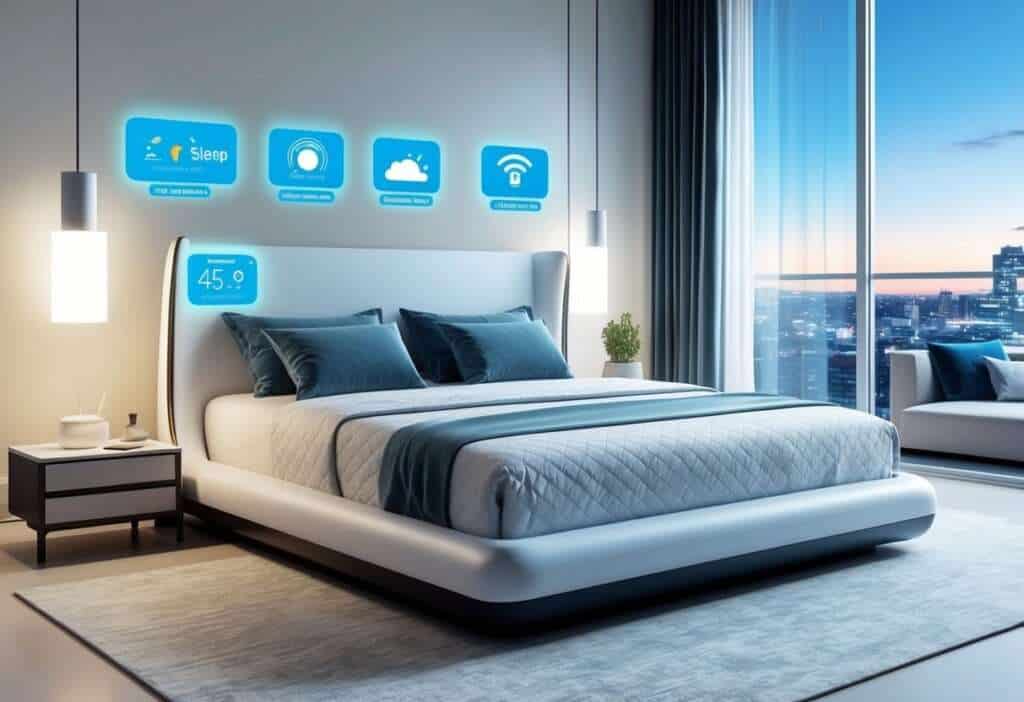
Sleep tech has come a long way. New gadgets and tools are changing how you rest at night. Let’s look at how sleep tech has grown and what’s new in the field.
From Traditional to Technological
Remember when counting sheep was the best sleep aid? Those days are gone. Now, you have smart beds and sleep apps to help you snooze better.
In the past, you might have used earplugs or pink noise machines. Today, you can pick from high-tech options. Smart pillows track your head movement. Wearable devices monitor your sleep stages.
Your old mattress is getting an upgrade too. New beds adjust to your body heat and position. Some even warm your feet to help you fall asleep faster.
Innovations Shaping Sleep
The sleep tech world is buzzing with cool new ideas. AI-powered sleep coaching is becoming popular. These systems learn your habits and give tips to improve your sleep.
Non-contact sleep monitors are another big step. They sit on your nightstand and track your sleep without touching you. No more uncomfortable wristbands!
Smart alarm clocks are getting smarter too. They wake you up at the best time in your sleep cycle. This helps you feel more refreshed in the morning.
Your whole bedroom can now work together for better sleep. Connected devices adjust your room’s temperature, light, and sound automatically.
Benefits of Smart Beds and Sleep Gadgets
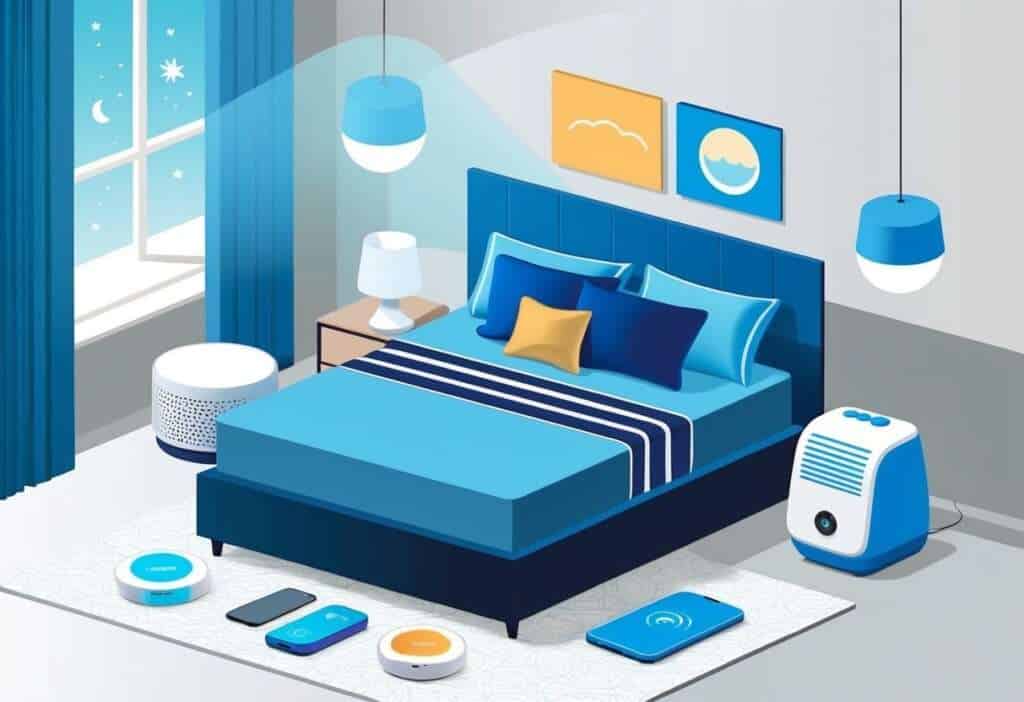
Smart beds and sleep gadgets offer exciting ways to improve your sleep. They can help you get comfy, understand your sleep habits, and boost your health.
Customization and Comfort
Smart beds let you adjust firmness and support to fit your needs. You can change settings with a tap on your phone. Some beds even warm up or cool down to your ideal temp.
Many smart beds have split sides. This means you and your partner can each pick your perfect feel. No more fights over a too-soft or too-firm mattress!
Some beds can raise your head if you snore. This can help you breathe easier and sleep better. Others can gently wake you up by slowly raising the bed.
Tracking Sleep Patterns
Sleep gadgets watch how you sleep without bugging you. They note things like:
- How long you sleep
- When you toss and turn
- Your breathing rate
- Your heart rate
This info helps you see what affects your sleep. You might notice you sleep worse after late-night snacks or better when you exercise.
Sleep apps can show you trends over time. This makes it easy to spot issues and track progress as you try to sleep better.
Health and Wellness Connections
Smart sleep tech can link to your other health gadgets. This gives you a fuller picture of your wellness.
For example, your sleep data might connect to your fitness tracker. You could see how your workouts affect your sleep quality.
Some smart beds can even spot signs of health issues. They might notice changes in breathing or heart rate that could mean a problem.
By tracking your sleep, you can make better choices for your health. You might decide to go to bed earlier or cut back on caffeine. These small changes can lead to big improvements in how you feel.
Selecting the Right Smart Bed for You
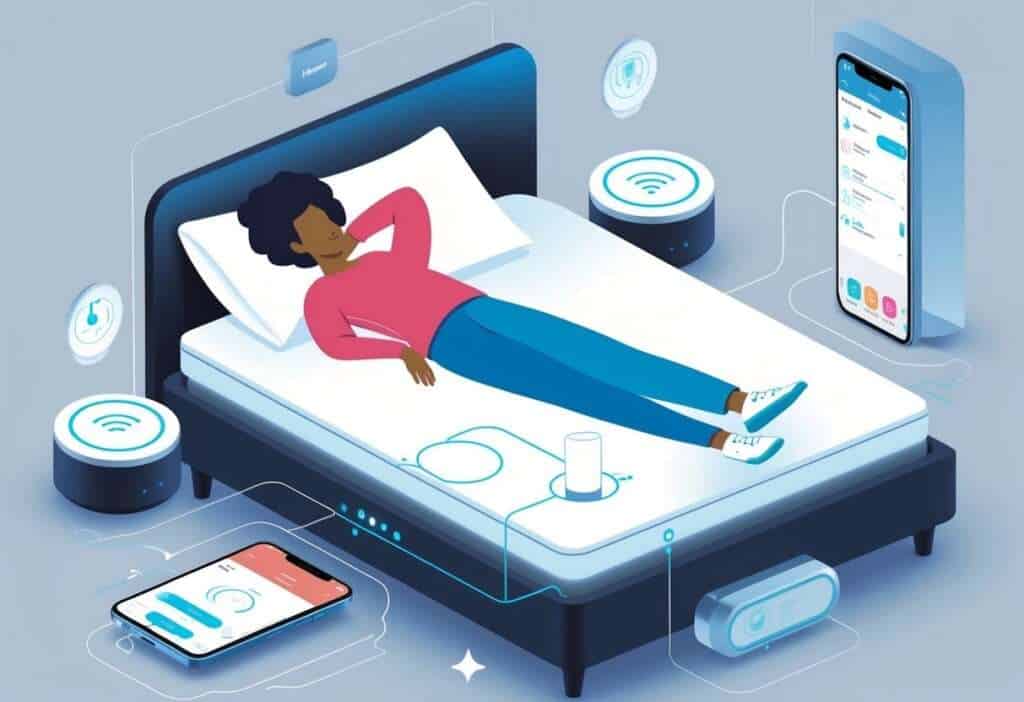
Picking a smart bed involves looking at your sleep habits and comparing features. You’ll want to find one that fits your needs and budget.
Assessing Your Sleep Needs
Think about how you sleep. Do you toss and turn? Do you sleep hot? Make a list of your sleep issues. This will help you find a bed that addresses your concerns.
Some smart beds can adjust firmness to match your comfort level. Others track your sleep patterns. If you share a bed, look for dual-sided options. These let each person set their own firmness.
Consider your health needs too. Some beds can help with snoring or back pain. Write down your top priorities to guide your search.
Comparing Smart Bed Features
Smart beds offer many cool features. Here are some to think about:
- Sleep tracking
- Temperature control
- Adjustable firmness
- Massage functions
- Smart home integration
Sleep Number beds are known for their adjustable air chambers. They let you change firmness with a tap on your phone. Saatva’s Solaire offers 50 firmness options.
Some beds, like the Bryte Balance, can adjust during the night to reduce pressure points. This can help if you often wake up sore.
Budget and Value Considerations
Smart beds can be pricey. Set a budget before you shop. Remember, a good bed is an investment in your health.
Look for sales and discounts. Many companies offer deals around holidays. Some smart beds start around $1,000, while high-end models can cost over $5,000.
Think about long-term value. A bed that helps you sleep better might be worth the extra cost. Check warranty terms and return policies. Some companies offer sleep trials, letting you test the bed at home.
Don’t forget about ongoing costs. Some smart beds need subscriptions for advanced features. Factor these into your budget.
The Integration of AI in Sleep Technology
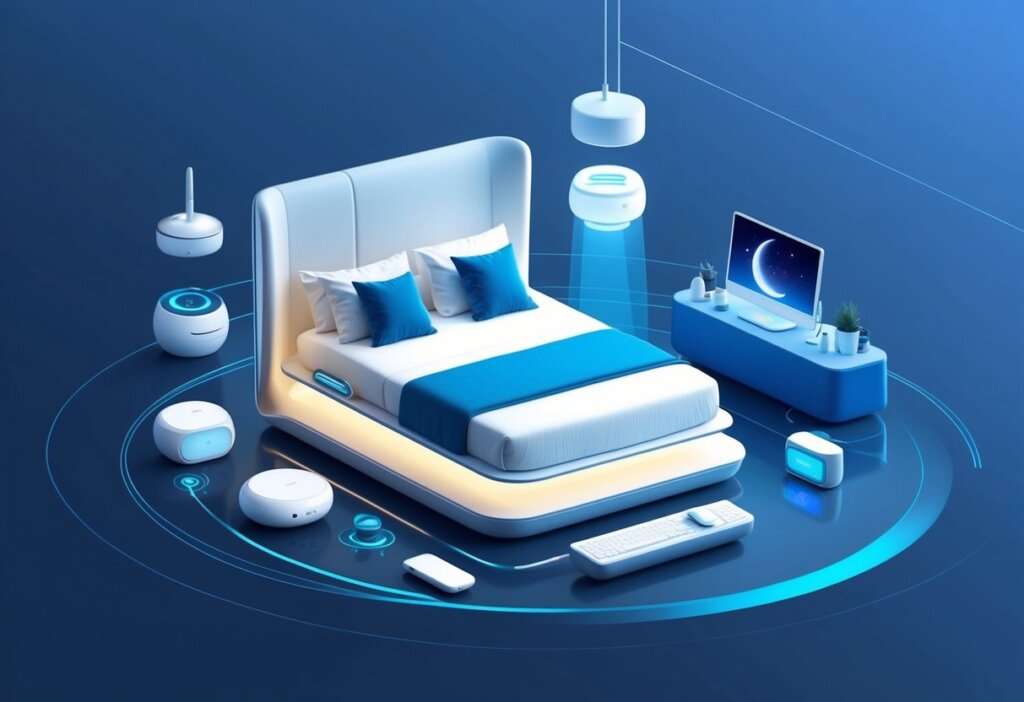
AI is changing how we sleep. Smart devices use AI to learn your habits and help you rest better. They can adjust your bedroom and give you tips to improve your sleep.
Personalized Sleep Recommendations
AI can give you custom sleep advice. Smart devices track your sleep patterns and use this data to suggest changes. They might tell you to go to bed earlier or adjust your room temperature.
These devices learn what works best for you over time. They can spot trends in your sleep quality and link them to your daily habits. You might find out that exercise helps you sleep better, or that late-night snacks keep you up.
Some AI sleep assistants even connect to other smart home devices. They can dim your lights or play soothing sounds at bedtime. This creates the perfect sleep environment just for you.
Smart Alarms and Sleep Cycles
AI-powered alarms are smarter than regular ones. They wake you up at the best time in your sleep cycle. This helps you feel more refreshed when you get up.
These alarms track your sleep stages throughout the night. They know when you’re in light sleep, deep sleep, or REM sleep. The alarm waits for a light sleep stage to wake you up gently.
You can set a wake-up window instead of a fixed time. The AI will choose the best moment within that window to wake you. This can make mornings easier and help you start your day feeling good.
Some smart alarms also use gentle sounds or light to wake you up slowly. This can feel more natural than a loud, sudden alarm.
Complementary Sleep Tech Accessories
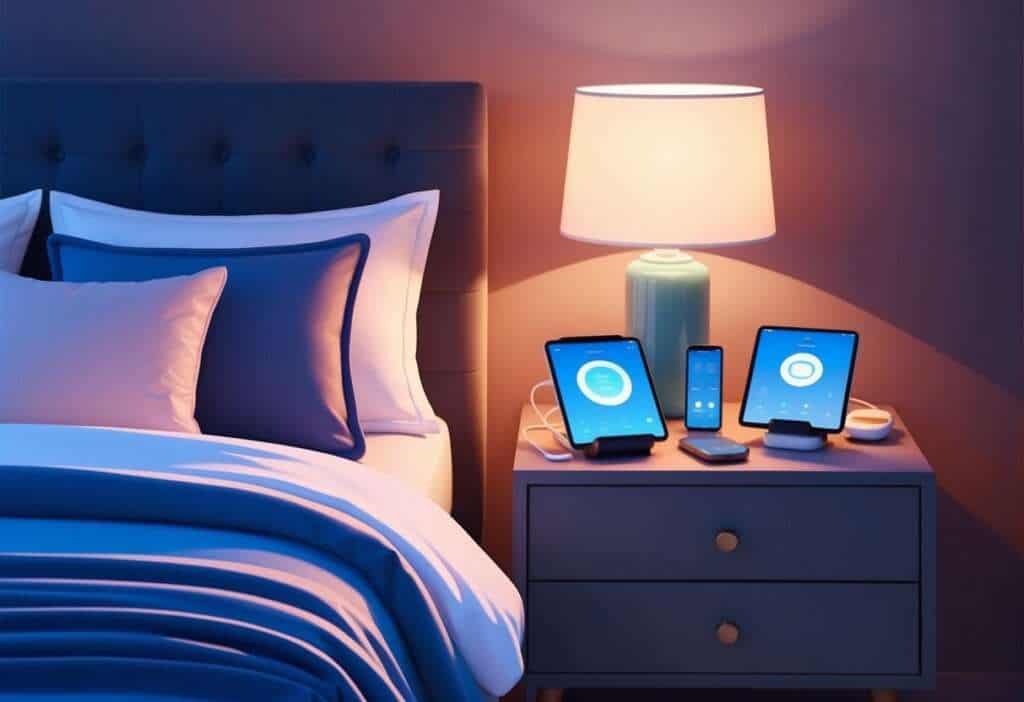
Smart sleep accessories can take your rest to the next level. These high-tech gadgets work with smart beds to create the perfect sleep environment.
Smart Pillows and Comforters
Smart pillows are packed with cutting-edge features to boost your sleep quality. Some models adjust their shape and firmness based on your movements. Others play soothing sounds or track your sleep patterns.
Smart comforters offer temperature control for optimal comfort. They can warm you up on chilly nights or cool you down when it’s hot. Some even have dual-zone settings for couples with different temperature preferences.
These smart bedding items often connect to apps on your phone. You can check your sleep data and adjust settings with a few taps.
Ambient Sound Machines and Lighting
Sound machines create peaceful environments to help you drift off. Many offer a variety of soothing noises like rainfall, ocean waves, or white noise. Some smart models let you customize sounds or set sleep timers through an app.
Smart lighting plays a big role in sleep quality too. Sleep-friendly bulbs can mimic natural light patterns. They dim gradually at night to help you wind down. In the morning, they brighten slowly to wake you gently.
You can program these lights to sync with your schedule. Some even work with your smart bed to adjust based on your sleep patterns.
Creating a Holistic Sleep Environment

A good night’s sleep depends on more than just your bed. Your surroundings and habits play a big role too. Let’s look at how to create the ideal sleep setting and blend tech with traditional methods.
The Role of Environment in Sleep Quality
Your bedroom setup can make or break your sleep. Aim for a cool, dark, and quiet space. The ideal sleep temperature is around 65°F (18°C). Use blackout curtains or an eye mask to block light.
White noise machines can mask disruptive sounds. Soft, breathable bedding helps regulate your body heat. Pick sheets and pillowcases in natural fibers like cotton.
Keep your room clutter-free. A tidy space can help calm your mind. Use calming colors like soft blues or greens on your walls. These shades promote relaxation.
Limit screen time before bed. The blue light from devices can mess with your sleep hormones. Try reading a book instead of scrolling on your phone.
Combining Tech with Traditional Methods
Smart beds offer high-tech sleep help. They can adjust firmness, track your sleep patterns, and even warm your feet. But don’t forget old-school tricks too.
Try aromatherapy with lavender oil to relax. A cup of caffeine-free herbal tea can be soothing. Gentle stretches or yoga can ease tension in your body.
Use a sleep app to guide you through meditation or play calming sounds. But balance this with offline wind-down routines. Write in a journal or do a puzzle to quiet your mind.
Smart light bulbs can mimic sunset and sunrise. This helps regulate your body’s natural sleep-wake cycle. Pair this with blackout curtains for the best of both worlds.
Ensuring Safety and Privacy

Smart beds collect lots of data about your sleep. It’s important to keep this info safe and know your rights as a user.
Data Security in Sleep Tech
Smart beds track things like your heart rate, breathing, and movement. This data is very personal. Companies must protect it well. Look for beds that use strong encryption. This scrambles your data so others can’t read it.
Check if the company shares your info with others. Some might sell it to advertisers. Others could give it to your doctor if you allow it. Always read the privacy policy before buying a smart bed.
Many beds connect to your home Wi-Fi. Make sure to use a strong password on your network. This helps keep hackers out of your sleep data.
Understanding Consumer Rights
You have the right to know what data your smart bed collects. Companies should tell you clearly what they gather and why. You can often choose what info to share.
Most places have laws about personal data. In the EU, you can ask companies to delete your info. This is part of the “right to be forgotten.”
You can usually opt out of data collection. But this might limit some features of your smart bed. It’s up to you to decide what’s worth sharing.
If a company has a data breach, they must tell you. Keep an eye out for these notices. They’ll let you know if your sleep data might be at risk.
Future Trends in Sleep Technology

Sleep tech is evolving rapidly. New innovations aim to revolutionize how you rest and recover each night. These advancements could transform sleep health for millions.
Innovations on the Horizon
Smart beds are getting smarter. Future models may adjust firmness, temperature, and position automatically as you sleep. They could react to your breathing and movement patterns in real-time.
AI-powered sleep coaching is improving. Soon, it may offer personalized advice based on your unique sleep data and lifestyle habits. This could help you make better choices during the day for better sleep at night.
Non-contact sleep monitors are becoming more accurate. Future versions might track your sleep stages without you wearing any devices. This could make sleep tracking easier and more comfortable.
The Potential Impact on Sleep Health
These new technologies could help you understand your sleep better than ever. You might be able to spot issues early and take action to improve your rest.
Smart beds and AI coaches could create the ideal sleep environment for you each night. This might lead to more consistent, high-quality sleep.
Wearable sleep tech is getting smaller and more powerful. Future devices might track not just sleep, but also stress levels and overall health. This could help you make connections between your daily habits and sleep quality.
As these technologies become more common, they might help reduce sleep disorders and improve public health. Better sleep could lead to increased productivity and well-being for many people.
Frequently Asked Questions

Smart beds offer many features to improve sleep. They track sleep patterns, adjust firmness, and control temperature. Here are answers to common questions about smart beds and their benefits.
What are the top-rated smart beds for the best sleep quality in 2024?
Some highly rated smart beds in 2024 include the Eight Sleep Pod 3 and the Saatva Solaire. The Eight Sleep Pod 3 has temperature control and sleep tracking. The Solaire lets you adjust firmness on each side.
These beds get good reviews for comfort and sleep quality. They offer different features to meet various needs and preferences.
How do smart beds enhance sleep quality and what features do they offer?
Smart beds can improve your sleep in many ways. They track your sleep patterns using built-in sensors. This data helps you understand your sleep habits.
Many smart beds let you adjust the firmness. Some can change temperature too. These features help you find the most comfortable setup for good sleep.
Some smart beds have alarms that wake you at the best time in your sleep cycle. This can help you feel more refreshed when you wake up.
Can you provide a cost comparison for the most popular smart beds available?
Smart beds range widely in price. Basic models may start around $1,000. High-end smart beds can cost $3,000 or more.
The Eight Sleep Pod 3 costs about $3,000 for a queen size. The Saatva Solaire is priced similarly. Simpler smart beds with fewer features may be cheaper.
Remember, prices can change. It’s a good idea to check current prices when you’re ready to buy.
What can you tell me about the longevity and durability of high-tech smart beds?
Smart beds are built to last, but their tech parts may need updates over time. The mattress itself should last 7-10 years, like regular high-quality beds.
The electronic parts might need service or replacement sooner. Warranties often cover these for 2-5 years. It’s smart to check the warranty before buying.
Regular care can help your smart bed last longer. Follow the maker’s cleaning and maintenance tips.
How does the Eight Sleep Pod 3 differ from other smart mattress options?
The Eight Sleep Pod 3 stands out for its temperature control. It can cool or warm each side of the bed separately.
This bed also tracks your sleep in detail. It measures things like heart rate and breathing. The app gives you a daily sleep score and tips.
Unlike some smart beds, the Pod 3 fits over your current mattress. This means you don’t have to replace your whole bed to get smart features.
What are the health benefits of using an advanced smart bed or smart bed frame?
Smart beds can help improve your overall health. They support better sleep quality, which is key for your well-being.
By tracking your sleep, smart beds help you spot issues. You might notice patterns that show why you’re not sleeping well.
Some smart beds adjust to your sleep position. This can help reduce pain and improve comfort. Better sleep can lead to better mood, focus, and energy during the day.


