
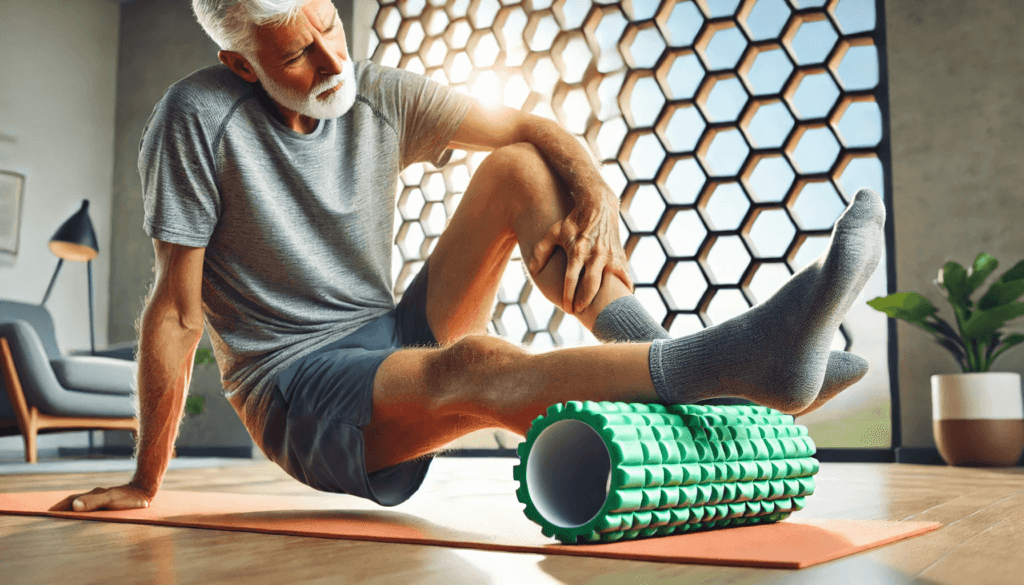
Are you tired of feeling stiff and sore? Foam rolling might be just what you need to loosen up those tight muscles. It’s a simple way to give yourself a massage and improve your flexibility. Foam rolling can help reduce pain from IT band syndrome, a common issue for active people over 50.
Foam rolling your IT band, the thick tissue on the outside of your thigh, can make a big difference in how you feel. It’s not just for athletes – anyone can benefit from this easy self-care technique. You’ll be amazed at how much better your entire body feels after a few minutes of rolling.
Ready to get started? We’ve got 10 great foam roller exercises for your IT band coming up. These moves are perfect for boomers looking to stay active and pain-free. You’ll learn how to target your IT band and surrounding muscle tissue for maximum relief.
Understanding IT Band Syndrome
IT band syndrome can cause knee pain and discomfort in your outer thigh. It’s common in runners and cyclists. Let’s look at what the IT band is and why it might give you trouble.
Anatomy of the IT Band
Your IT band is a thick strip of tissue that runs down the outside of your leg. It starts at your hip and ends just below your knee. The IT band connects to important muscles like your gluteus maximus and tensor fasciae latae. These muscles help move your leg and keep your knee stable.
The IT band isn’t a muscle itself. It’s made of tough, fibrous tissue that doesn’t stretch much. When you move, it slides over a bump on your thigh bone near your knee.
Causes and Symptoms
IT band syndrome happens when this tissue gets irritated. You might feel pain on the outside of your knee, especially when you’re active. The pain can spread up your thigh too.
Common causes include:
- Overuse from running or cycling
- Poor form during exercise
- Weak hip muscles
- Uneven leg lengths
Symptoms often get worse with activity. You might notice:
- Sharp pain on the outside of your knee
- A feeling of tightness in your outer thigh
- Discomfort when going up or down stairs
If you have these signs, it’s a good idea to rest and try some gentle stretches. Foam rolling exercises can also help ease the tightness in your leg muscles.
The Benefits of Foam Rolling for Boomers
Foam rolling can be a game-changer for boomers looking to stay active and pain-free. It helps with blood flow, flexibility, and muscle tension.
Enhancing Blood Flow and Flexibility
Foam rolling can boost your blood flow to muscles and joints. This increased circulation helps warm up your body before exercise and speeds up recovery after workouts.
As you roll, you’ll feel your range of motion improve. Tight muscles loosen up, letting you move more freely. This is great for everyday activities and exercise.
Try rolling your calves, thighs, and back. Start with light pressure and slowly increase as you get used to it. Aim for 30 seconds to 1 minute per muscle group.
Regular rolling can help keep your muscles flexible. This is key for boomers who want to stay active and avoid stiffness.
Reducing Muscle Tension
Foam rolling is like giving yourself a deep tissue massage. It helps break up knots in your muscle fibers, easing tension and soreness.
You can target specific muscle groups that often get tight, like your IT band or lower back. Roll slowly over these areas, pausing on any spots that feel extra tight.
Don’t push too hard – use enough pressure to feel it working, but not so much that it’s painful. Your muscles should feel more relaxed after rolling.
Rolling 2-3 times a week can help keep your muscles in good shape. It’s a simple way to care for your body and reduce everyday aches and pains.
Foam Roller Exercises for the IT Band
Foam rolling can help ease tension in your IT band and surrounding muscles. These exercises target the IT band area and related muscle groups to improve flexibility and reduce discomfort.
IT Band Roll-Out Technique
Start by lying on your side with the foam roller under your thigh. Place your top leg in front for support. Use your arms to move your body, rolling from your hip to just above your knee.
Roll slowly for 30-60 seconds. If you find a tender spot, pause there for 10-15 seconds. Remember to breathe deeply.
Don’t roll directly on your IT band. Instead, focus on the muscles that attach to it, like your glutes and quads.
Stretches for Associated Muscles
Before foam rolling, stretch the muscles connected to your IT band. This helps reduce overall tension.
Try a standing IT band stretch: Cross one leg behind the other and lean towards the front leg. Hold for 30 seconds, then switch sides.
For your TFL muscle, lie on your side with your bottom leg bent. Grab your top foot and pull it towards your buttocks. Feel the stretch in your hip and thigh.
Remember to stretch your glutes and quadriceps, too. These muscles play a big role in IT band tightness.
Advanced Foam Rolling Moves
Once you’re comfortable with basic techniques, try these advanced moves:
- IT Band and Glute Med Roll: Lie on your side with the roller under your hip. Cross your top leg over and place that foot on the ground. Roll from your hip to your knee.
- Quad and IT Band Combo: Start in a plank position with the roller under your thighs. Roll from your hips to just above your knees, focusing on your outer thigh.
- TFL Focus: Lie on your side with the roller just below your hip bone. Make small movements to target this often-tight muscle.
Remember to use proper form and listen to your body. If something hurts, ease off or stop.
Incorporating Foam Rolling into Your Routine
Foam rolling can be a great addition to your daily routine. It helps ease muscle tension and boosts flexibility. Let’s look at how to use it safely and effectively.
Best Practices for Daily Use
Start by setting aside 10-15 minutes each day for foam rolling. It’s best to roll before and after your workouts. This warms up your muscles and helps with recovery.
Focus on one area at a time. Roll slowly over each muscle group for about 30 seconds. If you find a tight spot, pause there for a moment. Don’t rush – take your time to feel the benefit.
Try to foam roll most days of the week. This regular practice will give you the best results. You might even notice less muscle soreness over time.
Remember, foam rolling is just one part of a healthy routine. Mix it with stretching and other exercises for the best outcome.
Safety Tips and When to Avoid Foam Rolling
While foam rolling is generally safe, there are some things to keep in mind. Never roll directly on joints or bones. Stick to muscle tissue only.
If you feel sharp pain, stop right away. Foam rolling might cause some discomfort, but it shouldn’t hurt badly. If it does, you might be pressing too hard.
Avoid foam rolling if you have:
- Open wounds or skin infections
- Recent injuries or broken bones
- Blood clots or circulation issues
If you’re not sure, it’s always best to ask your doctor or a physical therapist. They can guide you on the safest way to use a foam roller for your needs.
Pregnant women should check with their doctor before foam rolling. Some positions might not be safe during pregnancy.
Consulting with Healthcare Professionals

Getting expert advice is key for safe and effective foam rolling. You’ll want to know when to see a professional and how to get personalized guidance.
When to See a Physical Therapist
If you’re dealing with knee pain or other severe pain, it’s time to see a physical therapist. They can check if your IT band issues are part of larger problems.
Don’t ignore common complaints like tightness or discomfort. These could be signs of knee joint issues that need expert care.
A physical therapist can assess your condition and create a tailored plan. They might suggest specific foam roller exercises or other treatments.
Remember, persistent pain isn’t normal. Seek help if discomfort lasts more than a few days or gets worse.
Getting Personalized Foam Rolling Advice
A personal trainer can give you great tips on foam rolling techniques. They’ll show you how to target your IT band safely and effectively.
They can watch your form and make sure you’re doing exercises correctly. This helps prevent injury and get the most benefit.
Ask about the best type of foam roller for your needs. There are many options, from soft to firm.
Your trainer can also suggest how often to foam roll and for how long. They’ll help you create a routine that fits your lifestyle and goals.
Don’t be shy about asking questions. Your trainer is there to help you succeed in your fitness journey.
Frequently Asked Questions
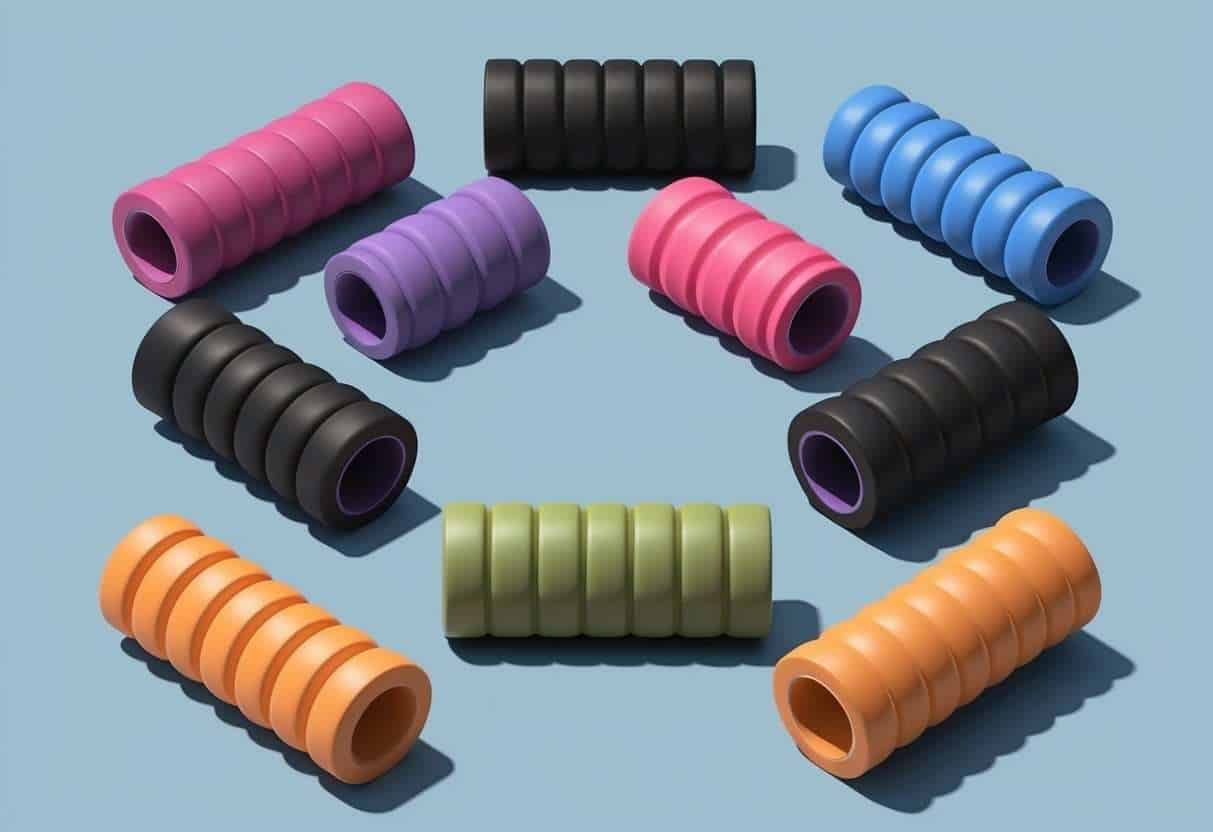
Foam rolling can be a great way for boomers to ease IT band discomfort. Let’s explore some key points about using foam rollers safely and effectively for IT band issues.
What are the top foam roller exercises for seniors to alleviate IT band pain?
Foam rolling exercises can help seniors ease IT band pain. Try rolling the outer thigh and hip area. You can also target the glutes and quadriceps.
These areas connect to the IT band and can reduce tension when rolled. Start with gentle pressure and increase as you get comfortable.
How can a foam roller be used safely by boomers for IT band issues?
Safety is key when foam rolling. Start with a softer roller if you’re new to the practice. Roll slowly and avoid putting too much weight on the roller at first.
If you feel sharp pain, stop rolling that area. It’s normal to feel some discomfort, but it shouldn’t be intense pain. Always check with your doctor before starting a new exercise routine.
What are the benefits of incorporating foam rolling into a boomer’s fitness routine?
Foam rolling can improve flexibility and reduce muscle soreness. For boomers, this can mean better mobility and less stiffness in daily activities.
Regular rolling may also improve circulation and help with recovery after exercise. It’s a simple way to give yourself a massage and relax tight muscles.
Can foam rolling reduce knee pain associated with IT band syndrome in older adults?
Foam rolling may help reduce knee pain linked to IT band syndrome. By loosening the muscles around the IT band, you can decrease tension on the knee.
Remember to roll the areas around the IT band, not directly on it. Focus on your outer thighs, hips, and glutes to see the best results for knee pain relief.
Why shouldn’t individuals directly foam roll their IT band, and what are the alternatives?
The IT band is not a muscle, but a thick fibrous band of tissue. Rolling directly on it may cause irritation without providing benefits.
Instead, focus on the muscles around the IT band. Roll your quads, hamstrings, and glutes. These muscles can affect IT band tension when tight.
What type of foam roller is best suited for seniors focusing on IT band exercises?
For seniors, a softer foam roller is often the best choice. It provides enough pressure without being too intense. Look for a roller with a smooth surface to start.
As you get more comfortable, you might try a firmer roller or one with textured surfaces. Always choose a roller that feels comfortable for you to use regularly.


