
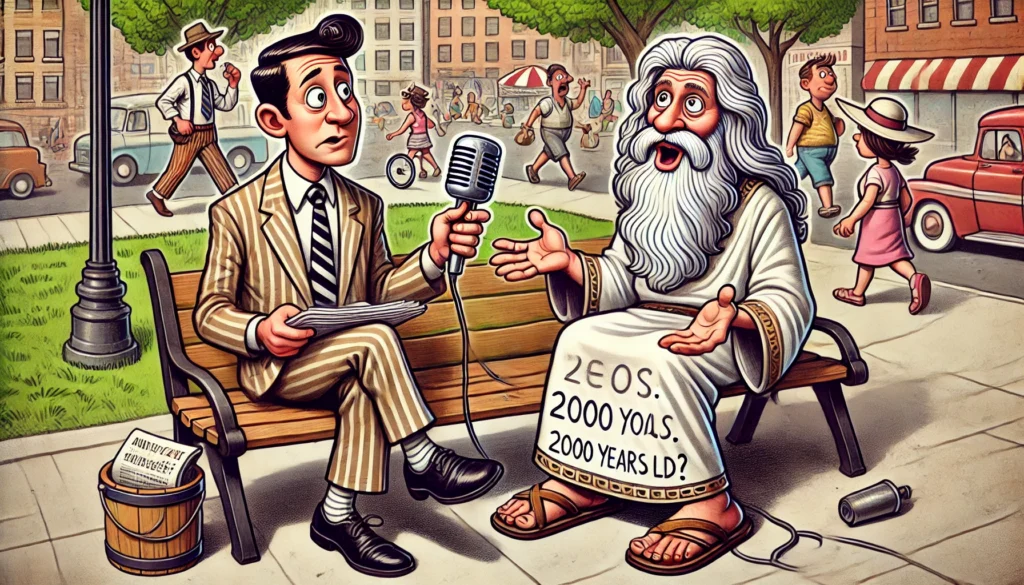
The world of comedy is filled with timeless sketches, iconic routines, and legendary duos. Among these, “The 2000 Year Old Man” stands out as a masterful blend of improvisation, satire, and historical parody. Created by the comedic geniuses Mel Brooks and Carl Reiner, this routine has left an indelible mark on comedy, influencing generations of comedians and delighting audiences for over six decades.
Origins of the 2000 Year Old Man
The genesis of “The 2000 Year Old Man” can be traced back to the late 1950s when Mel Brooks and Carl Reiner were both working on Sid Caesar’s iconic television program, “Your Show of Shows.”
Reiner, a talented writer and performer, and Brooks, a brilliant comedy writer, formed a close friendship. Their camaraderie and shared sense of humor led to impromptu performances that would later evolve into the “2000 Year Old Man.” The sketch began as an informal bit that Brooks and Reiner would perform at parties to entertain their friends.
The routine was initially intended as a private joke, but the reaction from friends and colleagues was overwhelmingly positive. Encouraged by the enthusiastic response, Reiner and Brooks decided to bring the sketch to a wider audience. Their first public performance of the “2000 Year Old Man” was on “The Steve Allen Show,” where it quickly became a hit with viewers.
The Comedy Albums
Recognizing the potential of the routine, Reiner and Brooks decided to record the “2000 Year Old Man” as an album.
In 1960, they released their first album, “2000 Years with Carl Reiner and Mel Brooks.” The album featured a series of interviews with the 2000-year-old man, covering a wide range of topics from historical events to personal anecdotes. The first album was a critical and commercial success, captivating audiences with its clever interplay and unique blend of historical references and absurdity.
Following their initial success, Reiner and Brooks released several more albums over the next few years. These included “2000 and One Years with Carl Reiner and Mel Brooks” (1961), “Carl Reiner and Mel Brooks at the Cannes Film Festival” (1962), and “2000 and Thirteen” (1973). In 1997, they reunited to release “The 2000 Year Old Man in the Year 2000,” which earned a Grammy Award for Best Spoken Comedy Album.
The album’s humor lay in its unique blend of historical references and absurdity.
The Structure of the Routine
The genius of “The 2000 Year Old Man” lies in its simple yet effective structure. Carl Reiner plays the role of a straight-laced interviewer, posing questions to Mel Brooks’ ancient character. The dynamic between the two is a classic example of the comedy duo format, with Reiner’s straight man providing the perfect foil to Brooks’ zany character.
The interview format allowed for a natural flow of conversation, with Reiner asking questions about various aspects of the 2000-year-old man’s life. Topics ranged from historical events and famous figures to everyday life and personal experiences. This setup provided Brooks with ample opportunity to showcase his improvisational skills, crafting witty and unexpected responses on the spot.
One of the hallmarks of the routine is its rich tapestry of historical and cultural references.
The Characters
The success of “The 2000 Year Old Man” is largely due to the strength of its characters and the chemistry between Reiner and Brooks.
Each character plays a vital role in the comedy, with Reiner’s interviewer providing the structure and Brooks’ 2000-year-old man delivering the punchlines. Reiner’s role as the interviewer is crucial to the routine’s success, with his straight-faced delivery and probing questions setting the stage for Brooks’ comedic responses.
Brooks’ portrayal of the 2000-year-old man is a masterclass in character comedy.
Memorable Questions and Answers
The charm of “The 2000 Year Old Man” lies in the clever and often absurd answers Mel Brooks gives to Carl Reiner’s questions. These interactions highlight the brilliance of Brooks’ improvisational skills and the seamless chemistry between the two comedians. Here are some of the most memorable questions and answers from the routine, showcasing the wit and humor that made the sketch a classic.
Did You Know Jesus?
One of the most iconic exchanges begins with Reiner asking, “Did you know Jesus?”
Brooks responds with perfect comedic timing, “Yes. Thin lad, wore sandals, walked around with twelve other guys. They came into a bar. They didn’t buy anything. They just asked for water, and then he did something with it, and made it into wine. So, I was always sneaking back into the bar, buying a bottle of gin, and turning it into water!”
This answer blends historical references with absurd humor, highlighting Brooks’ ability to take a well-known figure and place him in a hilariously mundane context. The image of Jesus and his disciples turning water into wine in a bar is both sacrilegious and comical, showcasing the routine’s edgy humor.
The Greatest Invention
Another classic question involves the inquiry, “What was the greatest invention you have seen in your 2000 years?”
Brooks’ character humorously replies, “Saran Wrap. It’s the greatest thing! You can put a sandwich in it, and it’s fresh for two thousand years.”
The absurdity of this answer, combined with Brooks’ delivery, underscores the routine’s unique comedic style. By selecting something as mundane as Saran Wrap and elevating it to the status of the greatest invention, Brooks subverts expectations and delivers a punchline that is both surprising and hilarious.
First Language
A frequently cited favorite is when Reiner asks, “What was the first language you spoke?”
Brooks responds with, “First we spoke rock, then we spoke smoke, then we spoke mammoth.”
This progression from primitive communication methods to something more complex is delivered with such wit and absurdity that it leaves a lasting impression on the audience. The idea of a language evolving from rocks to smoke signals to mammoth grunts is both imaginative and funny, showcasing Brooks’ ability to craft vivid and humorous imagery.
First Marriage
Reiner’s question about marriage leads to another humorous exchange: “Did you have a wife?”
Brooks replies, “I had over 200 wives.”
When Reiner probes further, asking how he managed so many, Brooks quips, “One at a time! That’s why I’m still here!”
This answer highlights the timeless nature of marital humor, as Brooks deftly navigates the topic with a blend of wit and relatability. The idea of having 200 wives “one at a time” is a clever play on words that adds to the humor.
The Secret to Longevity
In a routine centered around a man who has lived for 2000 years, Reiner naturally asks, “What is the secret to your longevity?”
Brooks answers, “Never run for a bus. There will always be another one. Even if it’s a different route.”
This advice, while humorous, also carries a grain of wisdom. Brooks’ character suggests a laid-back approach to life, emphasizing patience and perspective. The blend of humor and insight is a hallmark of the routine, making it both funny and thought-provoking.
First Job
Reiner asks about the 2000-year-old man’s first job, to which Brooks replies, “I was a cave guard. I had to make sure the cave didn’t move.”
When Reiner expresses skepticism, Brooks elaborates, “Well, it didn’t move, so I guess I was good at my job!”
This exchange exemplifies the routine’s absurd humor. The concept of a cave guard responsible for ensuring a cave’s immobility is both ridiculous and amusing, showcasing Brooks’ talent for creating outlandish scenarios.
Greatest Threat to Humanity
Another memorable question involves Reiner asking, “What was the greatest threat to humanity you’ve witnessed?”
Brooks answers, “The invention of pants. People used to be free, then pants came along and everyone got confined.”
This response is a playful commentary on societal norms and constraints, delivered with Brooks’ characteristic wit. The idea of pants as a threat to human freedom is a humorous exaggeration that highlights the routine’s ability to blend social commentary with comedy.
Favorite Historical Figure
Reiner’s query about the 2000-year-old man’s favorite historical figure yields another gem: “Who was your favorite historical figure?”
Brooks answers, “Moses. He was great. He could part the Red Sea and still find time to write the Ten Commandments. Multi-tasker, that guy.”
This answer is a humorous take on Moses’ legendary status, emphasizing his multitasking abilities in a modern context. Brooks’ portrayal of Moses as a busy, efficient figure is both funny and relatable, adding a contemporary twist to a historical icon.
Daily Life in Ancient Times
Reiner’s questions often delve into daily life in ancient times, asking, “What did you do for fun 2000 years ago?”
Brooks responds, “We threw rocks at each other. It was simple, but it passed the time.”
This response highlights the contrast between ancient and modern entertainment, using simplicity as a source of humor. The image of people passing the time by throwing rocks at each other is both absurd and amusing, capturing the essence of the routine’s humor.
The Legacy of Mel Brooks and Carl Reiner
Beyond the “2000 Year Old Man,” both Mel Brooks and Carl Reiner have had illustrious careers, leaving a lasting legacy in the world of entertainment.
Mel Brooks is a legendary figure in comedy, known for his work as a writer, director, producer, and actor. His filmography includes iconic comedies such as “Blazing Saddles,” “Young Frankenstein,” “The Producers,” and “Spaceballs.” Carl Reiner was a prolific writer, director, and actor, with a career spanning over seven decades.
He created and starred in “The Dick Van Dyke Show,” one of the most beloved sitcoms of all time.
Conclusion
“The 2000 Year Old Man” is a testament to the enduring power of comedy and the brilliance of Mel Brooks and Carl Reiner.
Its innovative blend of historical parody, character comedy, and improvisation has made it a timeless classic. The routine’s recordings continue to be enjoyed by new and old fans alike, and its influence can be seen in modern comedy. As both performers and creators, Brooks and Reiner have left an indelible mark on the comedy world, with “The 2000 Year Old Man” standing as one of their most beloved contributions.
Their work continues to inspire and entertain audiences today.


