
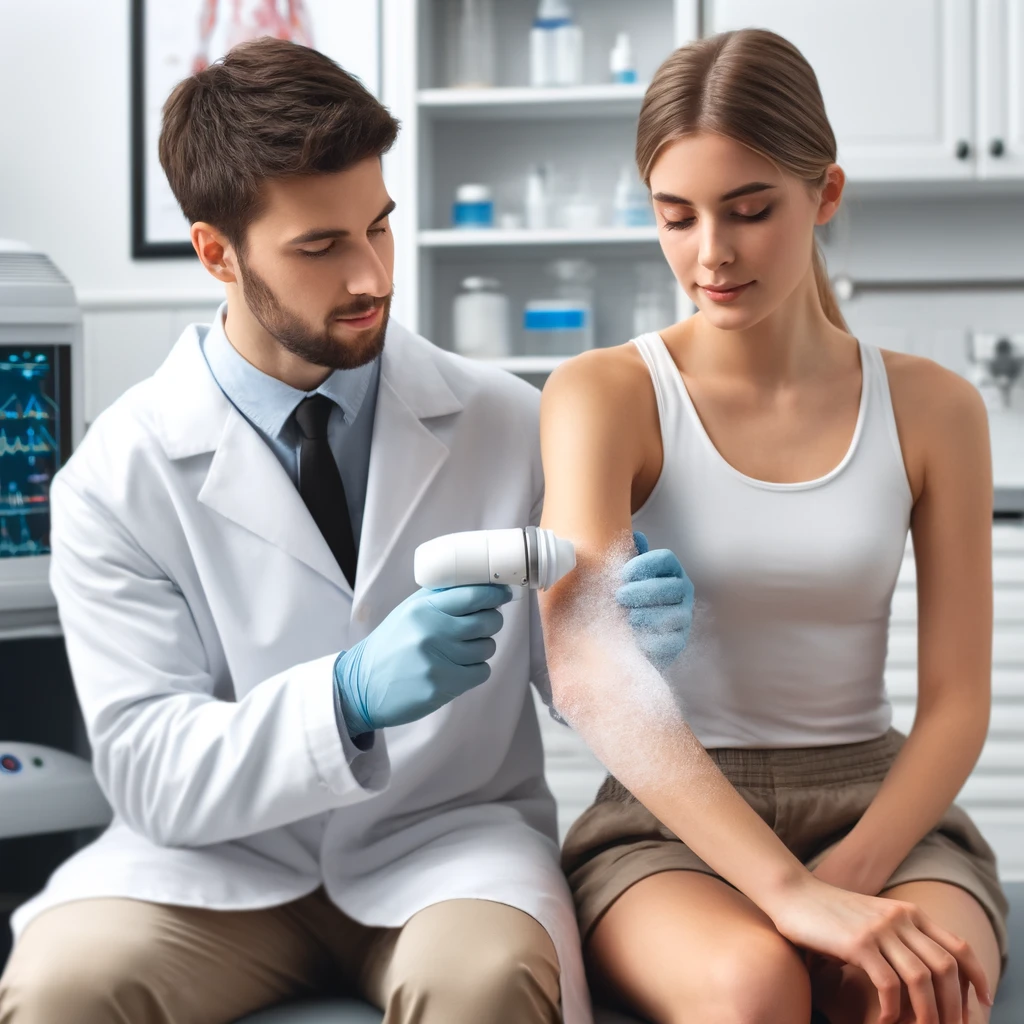
Cryotherapy, a therapeutic technique involving the application of extreme cold, has interesting implications for various medical conditions. In the context of orthopedic ailments, specifically those related to joint discomfort, cryotherapy has garnered attention for its potential to provide relief.
When we consider chronic elbow issues, such as tendonitis or the infamous tennis elbow, which poses a significant challenge for those affected, cryotherapy offered by a healthcare provider may become a viable option for managing pain and inflammation.
As we explore the effectiveness of cryotherapy for bad elbows, it’s important to understand the mechanism by which it might deliver benefits.
The application of cold therapy can reduce blood flow to a particular area, which can substantially decrease inflammation and swelling that causes pain, especially around the joints and tendons. Moreover, by slowing nerve conduction, cold can also serve to reduce pain signals, offering temporary relief for the sufferer.
It’s imperative for us to remember that while cryotherapy could provide symptomatic relief, it should be approached as part of a broader treatment plan.
Consulting with a healthcare provider is essential to understanding the suitability and safety of cryotherapy for individual circumstances, and to ensure it is used effectively in conjunction with other recommended treatments to promote healing and recovery of bad elbows.
Understanding Cryotherapy
When we discuss cryotherapy, we’re examining a treatment method that uses extreme cold to provide therapeutic benefits. We’ll focus on the mechanisms of cryotherapy and the available types.
Cryotherapy Mechanisms
Cryotherapy operates on the principle that extreme cold can reduce inflammation and numb pain. When we apply cold temperatures to a specific area, it causes a reduction in blood flow, which helps to decrease swelling and tissue damage.
Whole-body cryotherapy (WBC), on the other hand, exposes the entire body to nitrogen or argon gas at extremely low temperatures for a short period. The exposure to cold stimulates the body’s natural anti-inflammatory responses. Additionally, the cold temperature slows down the conduction of nerve impulses, effectively providing pain relief.
Types of Cryotherapy
There are several types of cryotherapy that we can utilize, each tailored for specific treatments:
- Local Cryotherapy: This involves applying an ice pack or a device, like a cryoprobe, directly to the painful area.
- Whole-Body Cryotherapy (WBC): This method involves stepping into a specialized chamber that surrounds the body with cold air cooled by liquid nitrogen.
- Medical Cryotherapy: This is a more targeted form of cryotherapy where liquid nitrogen or argon gas is used through a cryoprobe to freeze and destroy abnormal tissues, such as in the treatment of certain cancers.
By understanding these distinct types and mechanisms, we can better grasp how cryotherapy might be applied for specific conditions, including bad elbows.
The Benefits of Cryotherapy for Elbow Issues
Cryotherapy offers significant advantages for individuals dealing with painful elbow conditions. By utilizing extreme cold, we can target discomfort and accelerate healing.
Pain and Inflammation Reduction
When we apply cryotherapy to the elbow, we’re effectively reducing pain and inflammation in the area. The cold helps decrease blood flow, thereby mitigating swelling and the associated discomfort. This can be particularly beneficial for conditions like arthritis, including rheumatoid arthritis, where inflammation is a key issue.
- Pain relief: Cryotherapy numbs the affected area, providing immediate relief from pain.
- Inflammation and swelling: The cold temperatures reduce inflammation, which is often the source of elbow pain.
These effects can help decrease reliance on pain medication and improve overall joint function.
Post-Surgery Recovery
Undergoing elbow surgery can result in significant postoperative pain and swelling. Integrating cryotherapy into the recovery process, we can enhance healing and mobility.
- Recovery: Helps reduce muscle pain and speeds up the healing process post-surgery.
- Pain management: Can be used as a non-pharmacological therapy to manage postoperative pain.
The use of cryotherapy after procedures like elbow arthrolysis has shown promise in improving flexibility and decreasing recovery time. Overall, incorporating cryotherapy can be a strategic component of comprehensive post-surgery recovery plans.
The Procedure of Cryotherapy for Elbows
We understand that effectively managing elbow discomfort can often lead us to consider treatments like cryotherapy. Let’s look closely at the essential steps and methods involved when using cryotherapy for elbow issues.
Pre-Cryotherapy Considerations
Before we initiate cryotherapy, it’s crucial to evaluate the specific elbow condition and overall health.
Proper preparation involves consulting with a healthcare provider to determine if cryotherapy is an appropriate option. Conditions such as tennis elbow may benefit from cold therapy, but each individual case requires careful assessment. Additionally, if cryoablation or cryosurgery is considered, further medical evaluation will be necessary to plan the procedure accordingly.
Cold Application Techniques
Once cleared for cryotherapy, we can apply cold using various techniques:
- Ice Packs: Simple and commonly used, ice packs should be wrapped in cloth to protect the skin and applied for 15 to 20-minute intervals.
- Cold Water Immersion: For a more intensive treatment, the elbow can be immersed in cold water, though this technique should be monitored by a healthcare provider to manage exposure time and prevent potential skin damage.
Each technique aims to reduce inflammation and pain, but the choice depends on our individual condition and professional guidance. It is important to follow the correct procedure to ensure safety and effectiveness.
Potential Side Effects and Risks
When we consider cryotherapy for treating bad elbows, it’s important to be aware of the potential side effects and risks involved. Though it can be beneficial, it’s essential to understand what complications might arise and how to prevent them.
Common Complications
- Skin lesions and blistering: These are often a direct result of the extreme cold affecting the skin. Lesions may heal within a few days, but blisters can be particularly troubling if they become infected.
- Nerve damage: Although this is less common, prolonged exposure to cold may cause damage to nerves, typically presenting as numbness or tingling, which may become permanent.
- Scarring: Following skin lesions or blisters, there might be a risk of scarring, especially if the affected area gets infected or is not properly taken care of post-treatment.
Precautionary Measures
- Screening for contraindications: Before undergoing cryotherapy, we need to screen for conditions that might increase the risk of complications, such as peripheral neuropathy or certain skin conditions.
- Limiting exposure time: Treatments should not exceed the recommended duration—generally, a few minutes—to minimize the chances of adverse effects like headaches or increased blood pressure.
- Medical supervision: We should ensure that the procedure is conducted under proper medical supervision, particularly in settings where whole-body cryotherapy is employed.
Evaluating Clinical Evidence of Cryotherapy
In recent years, we have observed an increasing interest in cryotherapy as a non-invasive treatment for various types of pain, including discomfort from elbow conditions.
Our investigation into this subject takes us through a series of studies that focus on the impact of cryotherapy on alleviating pain, particularly post-surgery and in chronic conditions.
Clinical Trials and Studies:
- Whole-body Cryotherapy (WBC): Some studies suggest benefits for broader pain management.
- Local Cryotherapy (LC): More commonly used for targeted areas, like the elbow.
The evidence we gathered shows a mix of results. Some clinical trials have noted cryotherapy’s effectiveness in reducing pain and inflammation after surgery.
The controlled application of cold temperatures helps to minimize tissue damage and can speed up the recovery process. However, the extent to which it aids recovery can vary from patient to patient.
Elbow-Specific Findings:
- Post-surgery recovery: Positive response
- Chronic elbow pain: Mixed results; more research needed
Treatment protocols differ based on whether the pain is acute or chronic.
For post-surgical care, we find that a regimen of cryotherapy can be beneficial. However, when it comes to chronic elbow pain, our review highlights the need for further evidence to conclusively support cryotherapy’s long-term benefits.
Related Posts
10 Amazing Benefits of Acupuncture For Boomers
8 Amazing Benefits of Cervical Pillows For You


