
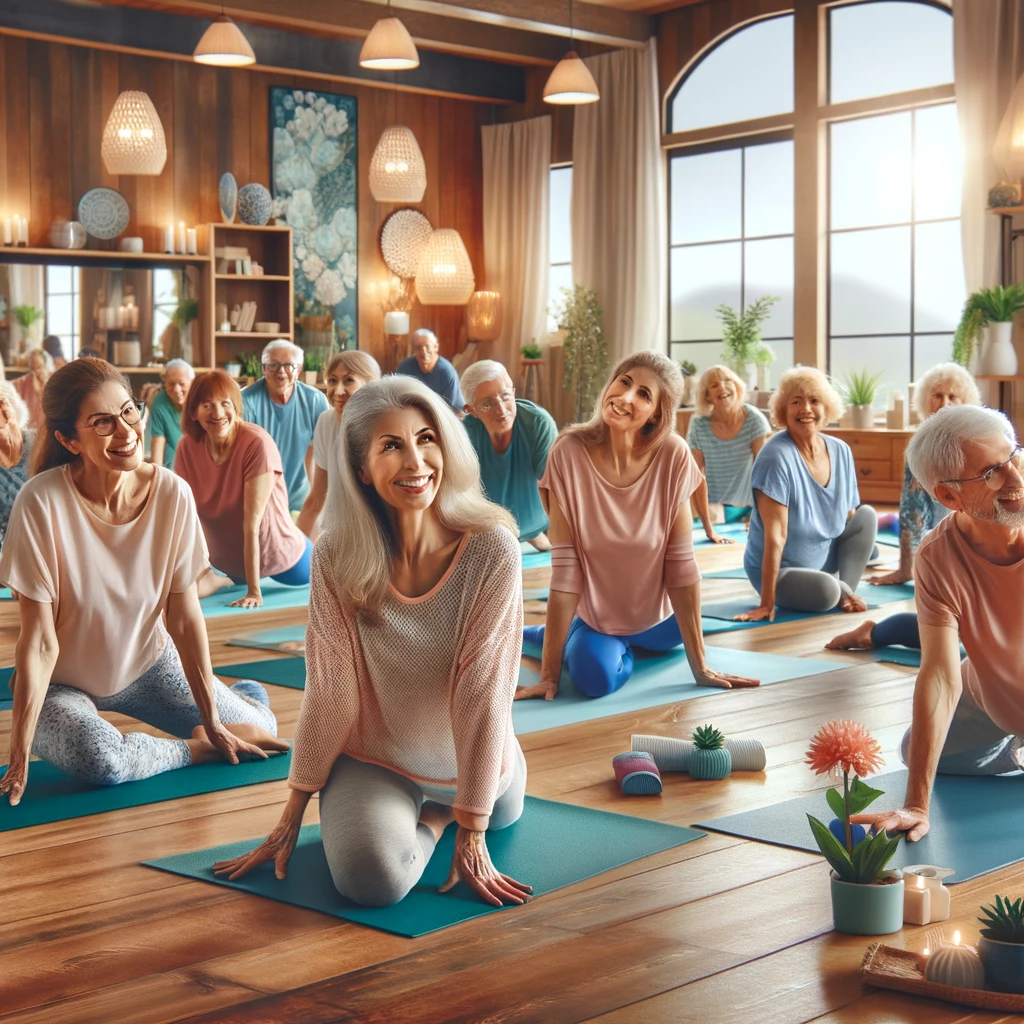
As we advance in age, it’s crucial for us to find ways to maintain our health and vitality.
For baby boomers, who are now entering their golden years, there’s a growing interest in activities that can support both physical and mental well-being.
Yoga emerges as a particularly beneficial practice, offering a holistic approach to fitness that can be adapted to different ability levels.
It’s more than just exercise; it’s a way to improve flexibility, balance, and tranquility in our lives.
Our generation has always been known for embracing new ideas and breaking stereotypes, and yoga for baby boomers is no exception.
This form of exercise isn’t just for the young; it meets us where we are, adapting to our unique health needs and lifestyle.
The benefits of incorporating yoga into our routine are manifold, ranging from alleviating common aches and pains to enhancing mental health and promoting a more active, engaged lifestyle.
Embracing yoga at this stage in life can lead to significant improvements in our overall health.
Regular practice helps to reinforce bone strength, ameliorate joint mobility, and boost cardiovascular fitness—all critical aspects as we age.
We’re not just preserving our current state of health; we’re actively striving for an enriched quality of life, ensuring that our later years are as vibrant and fulfilling as the ones that preceded them.
Benefits of Yoga for Baby Boomers
Yoga offers a comprehensive approach to well-being as we age, addressing our physical health, mental resilience, and social connections.
It is a holistic exercise that enhances our quality of life, particularly during the golden years.
Physical Health Advantages
Yoga is instrumental in maintaining and improving flexibility and balance, which are crucial as our bodies age.
Regular yoga practice can lead to:
- Increased flexibility: Helps keep the muscles and joints supple, thus reducing the risk of injury.
- Improved balance and coordination: Can prevent falls that are commonly associated with aging.
In terms of chronic conditions, yoga is known to:
- Help in managing osteoporosis, due to its weight-bearing postures that promote bone density.
- Alleviate aches and pains associated with aging, such as those caused by arthritis.
Moreover, yoga can help to maintain a healthier heart, potentially reducing the risk of heart disease.
Mental and Emotional Wellness
The mental and emotional benefits of yoga for Baby Boomers are substantial, contributing to overall mental health and a reduction in depression and anxiety levels.
- Yoga includes meditation and breathing exercises that help lower stress levels, providing a sense of calm and clarity.
- Engaging in this mind-body practice can combat feelings of loneliness and depression by fostering a peaceful state of mind.
This guide for Baby Boomers outlines how yoga promotes mental well-being.
Preventing and Managing Age-Related Conditions
Regular yoga practice can be an effective tool in the prevention and management of age-related health issues:
- Chronic pain: Gentle yoga can provide relief from chronic pain by enhancing pain management skills.
- Heart health: Some yoga poses contribute to cardiovascular health, which is essential as we age.
Furthermore, yoga’s emphasis on mindfulness has been linked to better management of symptoms related to chronic health conditions.
Social and Community Aspects
Practicing yoga doesn’t only benefit us on an individual level but also plays a role in our social lives, providing opportunities to connect with others:
- Group yoga classes encourage community building, which can be a valuable antidote to social isolation.
- The support found in yoga groups can offer a sense of belonging and mutual encouragement often needed as we age.
The idea of community is particularly pivotal, as highlighted in the benefits of yoga for an aging population.
Yoga Poses Suitable for Baby Boomers
Yoga is a versatile practice that accommodates individuals of all ages, and we have curated a series of poses that cater to the unique needs of Baby Boomers.
These poses focus on enhancing flexibility, strengthening muscles, and promoting balance, which are key for maintaining well-being as we age.
Gentle Yoga Asanas for Beginners
For those of us just starting our yoga journey, gentle yoga asanas are a perfect entry point.
- Mountain Pose (Tadasana): A fundamental pose for improving posture and grounding through the feet.
- Tree Pose (Vrksasana): Helps strengthen leg muscles and promote balance and coordination; can be performed using a chair for support.
- Warrior II (Virabhadrasana II): Ideal for building lower body strength and stability; modify by lessening the bend in the front knee if needed.
Adaptive Poses for Improved Flexibility
Flexibility can be enhanced with the right yoga poses that are amendable to our current flexibility levels.
- Seated Forward Bend (Paschimottanasana): Stretches the spine and helps relieve back pain; use a strap around the feet if the hands don’t reach comfortably.
- Cow Pose (Bitilasana): Increases flexibility in the neck and spine; perform on hands and knees, moving in conjunction with the breath.
- Triangle Pose (Trikonasana): Engages the legs and hips while stretching the sides of the torso; use blocks for support if unable to touch the ground.
Strengthening and Balance Practices
Maintaining bone strength and balance is crucial for us as we age, and certain poses are particularly effective for these goals.
- Bridge Pose (Setu Bandhasana): Strengthens the back, legs, and pelvis, and can improve respiratory function; use a block under the sacrum for added support.
- Downward Dog (Adho Mukha Svanasana): Great for overall body strength, especially in the arms and legs.
- Legs Up the Wall (Viparita Karani): Encourages circulation and relieves tired legs; bolster or cushion can be used under the hips for comfort.
Incorporating Yoga into Daily Life
As we embrace the journey of retirement, incorporating yoga into our daily routine becomes a proactive way to enhance our well-being.
With a focus on flexibility, relaxation, and spiritual discipline, we can create a sustainable practice that adapts to our individual needs.
Creating a Sustainable Yoga Routine
We must approach yoga with an understanding of our bodies’ capabilities and limitations, especially focusing on our back and joint health.
Starting with gentle poses each morning primes us for the day and sets a tone of mindfulness.
We can integrate supportive yoga practices using chairs or wall supports to ensure safety and comfort.
Aiming for consistency over intensity helps us avoid burnout and keeps yoga as a sustainable habit.
Understanding the Spiritual Discipline of Yoga
Yoga transcends physical movement; it is a spiritual discipline that nurtures harmony and a connection to the present moment.
As we practice, we focus not just on poses but also on breathing techniques that deepen our sense of relaxation and inner peace.
This holistic approach underscores the importance of yoga as more than exercise—it’s a way to engage with life’s ongoing flow.
Practical Tips for Yoga Practitioners at Home
To effectively practice yoga at home, we can adapt our space to be conducive to relaxation and focus:
- Select a dedicated area: A calm, clutter-free zone where you won’t be disturbed.
- Gather props: Yoga mats, blocks, and straps provide support and help with alignment.
- Incorporate online resources: When unable to attend yoga classes at a gym or studio, we can utilize online classes to guide our practice.
- Set a schedule: Regular practice is key, even if it means a short session. Slotting in yoga before breakfast or during a break can help meet the demand of daily practice.
Safety and Modifications for Mature Yogis
As we age, our bodies often require different approaches to yoga to ensure our practice remains both beneficial and safe. We need to adapt poses, address specific aches and pains, and be mindful of existing medical conditions.
Adapting Poses to Ensure Safety
It’s crucial for us to adapt yoga poses to maintain safety and prevent injury.
As we mature, our joints may not be as supple, and our balance may not be as steady. We should focus on using props like blocks, straps, and cushions to modify poses.
For example, instead of a full Pigeon pose, which can strain the knees and hips, supported Pigeon pose using a bolster can offer similar stretch with less stress on the joints.
In a vinyasa practice, movements should be slow and controlled. Rapid transitions are replaced with mindful, deliberate motions that respect our body’s limits and help maintain heart rate at a safe level.
Dealing with Pain and Improving Mobility
To manage chronic pain and improve mobility, we start by identifying the types of movements that alleviate pain rather than exacerbate it.
For instance, gentle twists and forward bends can ease lower back discomfort.
It’s important to listen to our bodies and recognize the difference between the sensation of a stretch and actual pain.
If any movement causes pain, we modify the pose or use supportive yoga techniques tailored to our current physical state. We can incorporate simple stretches that target areas prone to aches and pains.
Related Articles
Traditional vs. Hot Yoga: Origins and Evolution Explored
10 Great Non-Traditional Activities for Staying Healthy and Sharp


