

When we think about yoga, we often picture a serene environment where deep breaths and flowing postures help us to find peace and balance.
Traditional Yoga, with its centuries-old practices, is all about creating this harmony between mind, body, and spirit in a soothing setting. It allows us to connect with ourselves on a profound level, fostering flexibility, strength, and mental clarity without the need for any special environment.

In contrast, Hot Yoga introduces us to a more intense experience where the heat turns up, literally. In a room heated to about 105 degrees Fahrenheit, Hot Yoga challenges our physical endurance and mental resilience, providing us with a different kind of test.
The heat encourages our muscles to become more pliable, potentially increasing our flexibility and allowing us to deepen our practice. We should listen to our bodies, however, as the heat can also increase the risk of overstretching or dehydration if we’re not careful.
What’s fascinating is that each of us might find a unique set of benefits, whether we choose the heated path of Hot Yoga or the traditional route.
Some of us might gravitate towards the detoxifying sweat sessions of Hot Yoga, while others find the meditative quality of Traditional Yoga more aligning with our needs. It’s about finding which practice resonates with our personal wellness goals and how each can fit into our lifestyle.
Whether it’s the warm embrace of a hot studio or the calm of a quiet room, both practices invite us to explore the layers of our yoga journey.
Origins and Philosophy of Yoga Styles
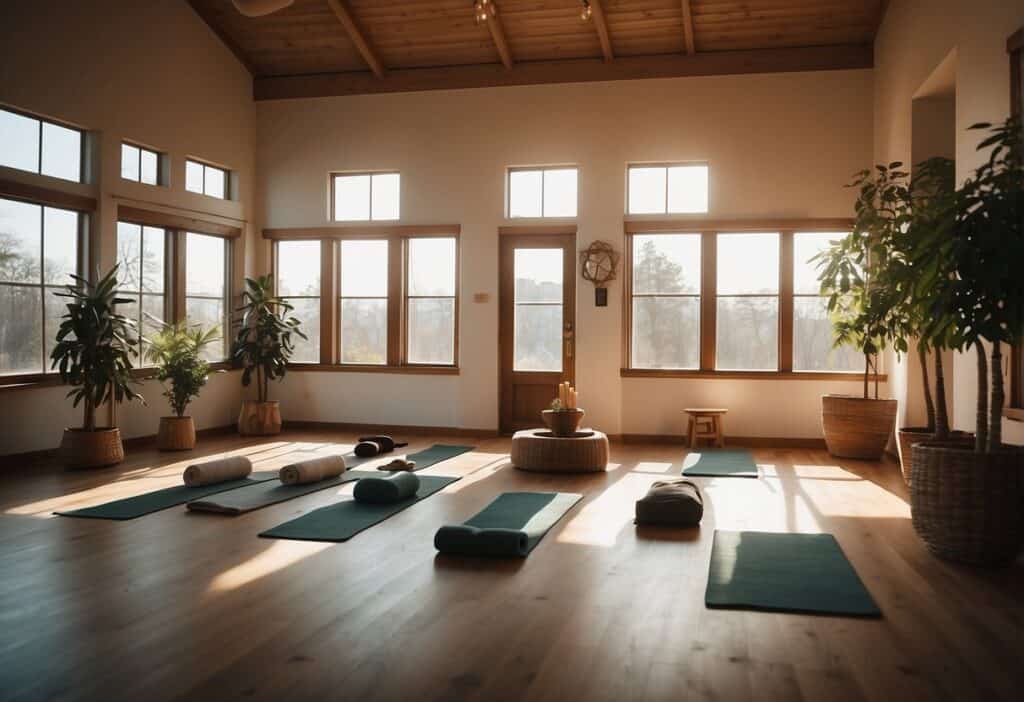
Yoga, a practice with rich historical roots, spans a wide array of styles, each with its own unique philosophy and methods. Exploring the origins of traditional yoga and the evolution of hot yoga can help us appreciate the diversity within this ancient practice.
Historical Roots of Traditional Yoga
Traditional Yoga traces back over 5,000 years in India. Embedded in Hindu philosophy, it is often linked to the Vedas, the oldest sacred texts, which lay the groundwork for spiritual discipline.
In its classical form, best captured by the Yoga Sutras of Sage Patanjali, it prescribes a path of eight limbs that guides practitioners towards enlightenment. Central themes of traditional yoga include moral codes, self-discipline, focused concentration, and meditative absorption. These form a holistic approach not just to physical well-being, but also to profound spiritual growth.
Hot Yoga Evolution and Bikram Choudhury
Hot Yoga, a modern development within the sphere of yoga, emerged prominently in recent decades. Bikram Yoga, the original Hot Yoga style, was developed by Bikram Choudhury and involves a series of 26 postures performed in a heated room.
This style is intended to mimic the temperatures of Choudhury’s native India. Hot Yoga deviates from traditional yoga by focusing on detoxification through intense sweating and increased flexibility from the warm environment, though it has been subject to controversy particularly around its strict posture sequence and the proprietary nature under Choudhury’s tutelage.
Physical and Mental Benefits
In diving into the physical and mental benefits of Hot Yoga and Traditional Yoga, we find that both offer unique advantages. Our focus will zero in on how each form enhances health and flexibility, along with the ways they foster mindfulness and reduce stress.
Health and Flexibility Gains
Hot Yoga grants us some significant benefits in terms of health and flexibility. The heat in Hot Yoga classes increases muscle flexibility, making it easier for us to go deeper into poses and potentially reducing the risk of injury.
The sweaty sessions also aim to boost cardiovascular health as our bodies work hard to cool down, resembling a form of cardiovascular exercise.
Traditional Yoga, on the other hand, also promotes flexibility and muscle strength but often with a gentler, less intense approach.
It’s profound in its capacity to cater to various health conditions, offering a range of styles to suit our unique needs, from gentle restorative sessions to more physically demanding practices.
Mindfulness and Stress Reduction
Hot Yoga not only tests our physical limits but also challenges our mental resilience. The intense environment can be a practice ground for staying focused under pressure, thus amplifying our mental well-being and ability to manage stress.
However, the high temperatures might be overwhelming for some, potentially making it harder to maintain mindfulness.
On the flip side, Traditional Yoga is deeply rooted in the art of mindfulness. It often incorporates breath work and meditation, ingraining a sense of calm and fostering stress reduction.
We may find that the serene setting of a traditional class allows for a deeper connection with our thoughts and a better environment for cultivating mindfulness.
Yoga Practice Essentials

In our yoga journey, whether we’re sweating it out in Hot Yoga or embracing the tranquility of Traditional Yoga, some fundamentals remain crucial. We focus on the harmony of breath control and precise physical alignment, essential to maximizing our practice’s benefits.
Breath Control and Sequences
In both Hot Yoga and Traditional Yoga, breathing exercises, or Pranayama, set the foundation. We sync our breath with movement in a flowing sequence, known as a Vinyasa, to build heat and circulate energy.
For instance, during Sun Salutations, an inhale might bring us into an upward reach while an exhale grounds us into a forward fold. The Ujjayi breath, a method where we breathe deeply through the nose with a gentle constriction at the back of the throat, can be particularly useful in maintaining rhythm and focus during our sequences.
Poses and Alignment
Each posture, or Asana, we take on requires attention to alignment. Whether it’s the balance-challenging Tree Pose or the strength-building Warrior Pose, we ensure that our body’s placement promotes stability and reduces the risk of injury.
In Hot Yoga, the heat aids our muscles to go deeper into poses, but it also means we must be attentive to not overstretch. Traditional Yoga may emphasize longer holds in asanas to cultivate steadiness and depth in practice.
No matter the style, aligning our body correctly allows us to reap the full benefits of each posture.
Factors Affecting Practice
Before deciding between Hot Yoga and Traditional Yoga, there are important factors to consider that affect the practice. Let’s examine how temperature, humidity, and personal safety play pivotal roles in shaping our yoga experience.
Impact of Temperature and Humidity
Hot Yoga: The practice takes place in a room heated to approximately 95-105°F with a humidity level around 40%. This increased temperature can lead to more flexibility and a deeper stretch. It also intensifies the workout, promoting sweating which many believe aids in detoxification.
Traditional Yoga: It is typically performed in a room with natural temperature. The absence of an artificially heated environment means less sweating, and may reduce the risk of heat-related issues, making it suitable for those who prefer a moderate climate for their practice.
- Temperature:
- Hot Yoga: High, up to 105°F
- Traditional Yoga: Varies, often room temperature
- Humidity:
- Hot Yoga: Approximately 40%
- Traditional Yoga: Depends on natural environmental conditions
Personal Considerations and Safety
Each of us must consider our personal health and safety when choosing a style of yoga. For Hot Yoga, one should be mindful of hydration and aware that the heat can pose risks such as heatstroke or dehydration if proper safety precautions are not taken.
For those with health concerns or who may be vulnerable to heat, Traditional Yoga may be a safer option that still offers the benefits of flexibility, stress relief, and fitness improvement. Your personal preference also comes into play—whether you thrive in a high-heat environment or prefer the cooler settings of Traditional Yoga, listen to your body.
- Safety Precautions:
- Hot Yoga: Hydrate well, listen to your body, take breaks
- Traditional Yoga: Focus on form and alignment, don’t push beyond your limits
- Personal Preference:
- Hot Yoga: Ideal for those who seek an intense, sweat-inducing session
- Traditional Yoga: Perfect for individuals who prefer a more relaxed climate
Comparative Analysis

In our examination of Hot Yoga versus Traditional Yoga, we recognize distinct physiological impacts and varying levels of beginner-friendliness. These elements are crucial as we consider aligning our yoga practice to personal goals and experiences.
Physiological Differences
Hot Yoga, practiced in heated environments, often surpasses 100°F, intensifying our sweat production which aids in the body’s natural cooling process. Some proponents suggest this could improve our cardiovascular performance since our heart rate is elevated comparable to a workout.
On the contrary, Traditional Yoga might not lead to extensive sweating but still promotes physical and mental strength.
- Heat Impact: Our bodies in Hot Yoga endure rigorous environmental stress, potentially increasing circulation and flexibility.
- Sweat Factors: Excessive sweating is thought to help with detoxification, although it’s vital to stay hydrated to prevent dehydration.
Experience and Accessibility for Beginners
For Beginners, Traditional Yoga might be a more accessible entry point. It has a slow pace and normal temperature settings. These allow for gradual progress and understanding of yoga poses and philosophy.
- Introductory Space: Regular Yoga classes typically offer a more forgiving atmosphere for those new to yoga. They focus on foundational poses and breathwork.
- Heat Challenge: Hot Yoga can be daunting for beginners. This is due to the heated environment and the demanding poses that require a certain level of endurance and acclimatization.


