
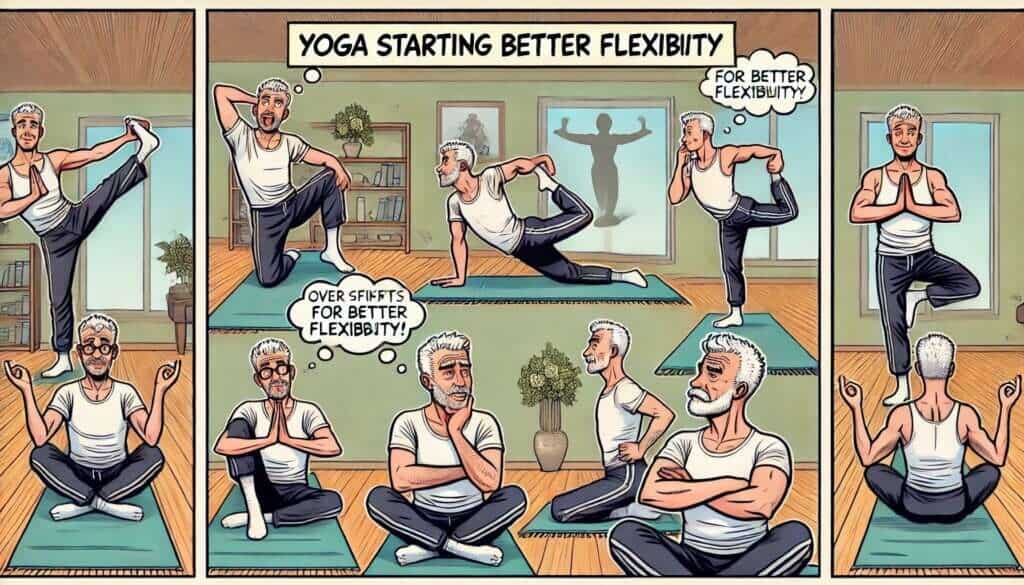
Yoga isn’t just for young, flexible folks. It’s a great way for men over 50 to stay fit and healthy. You might think yoga is too gentle, but it can be a real workout that builds strength and flexibility.
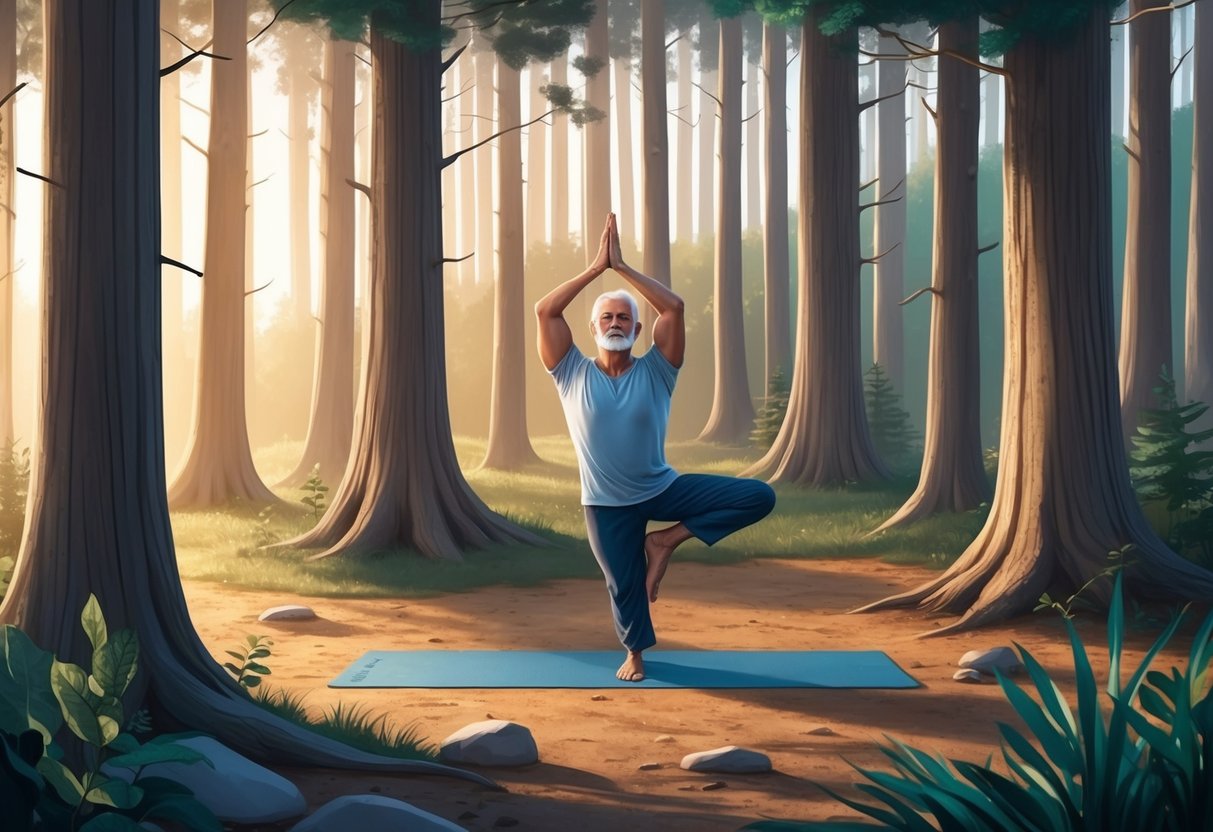
Yoga for men over 50 can improve your physical and mental well-being, prevent injuries, and help manage chronic conditions. It’s not about twisting into pretzel shapes. Instead, it’s about moving your body in ways that feel good and keep you strong.
You don’t need fancy equipment to get started. Many yoga programs for beginners offer simple poses you can do at home. Some even have apps to guide you through workouts. Whether you’re brand new to yoga or getting back into it, there’s a practice that’s right for you.
Understanding the Benefits of Yoga for Men Over 50
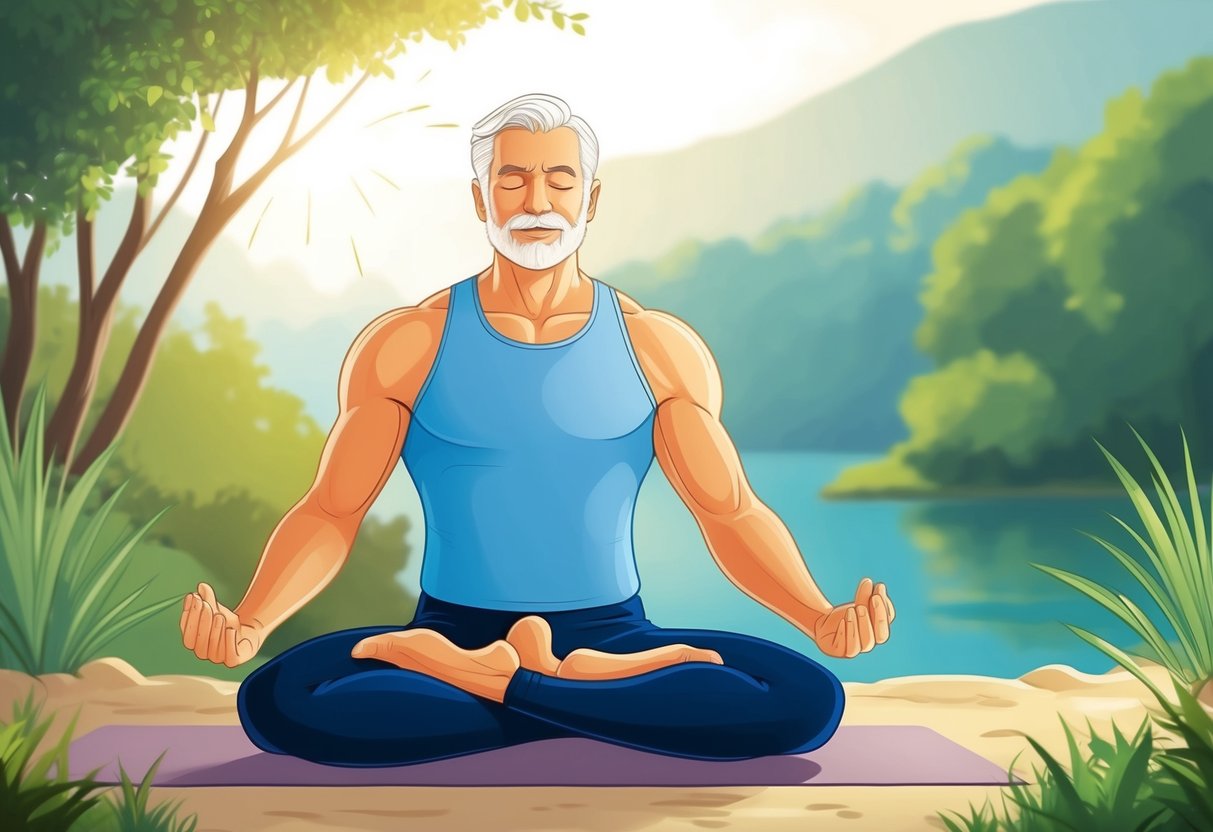
Yoga offers many perks for men in their 50s and beyond. It can boost your mood, make you more flexible, and help you feel calmer.
Boosting Mental Health and Reducing Stress
Yoga can work wonders for your mental health. As you stretch and breathe, you’ll feel your worries melt away. Yoga for men over 50 is a great way to ease stress and feel more relaxed.
When you do yoga, your body makes feel-good chemicals. These help you feel happier and less anxious. You might find it easier to sleep at night too.
Yoga also teaches you to focus on the present moment. This can help clear your mind of worries about the past or future. Many men find this very calming.
Enhancing Flexibility and Range of Motion
As you get older, you might notice you’re not as bendy as you used to be. Yoga can help fix that! Regular practice can make you more flexible and improve your range of motion.
Yoga poses for men over 50 are great for stretching tight muscles. You’ll feel less stiff and more limber. This can make everyday tasks easier, like tying your shoes or reaching for things on high shelves.
Yoga also helps prevent injuries. When you’re more flexible, you’re less likely to pull a muscle or strain your back. Plus, better balance from yoga means you’re less likely to fall.
Starting with the Basics: Yoga Poses and Techniques
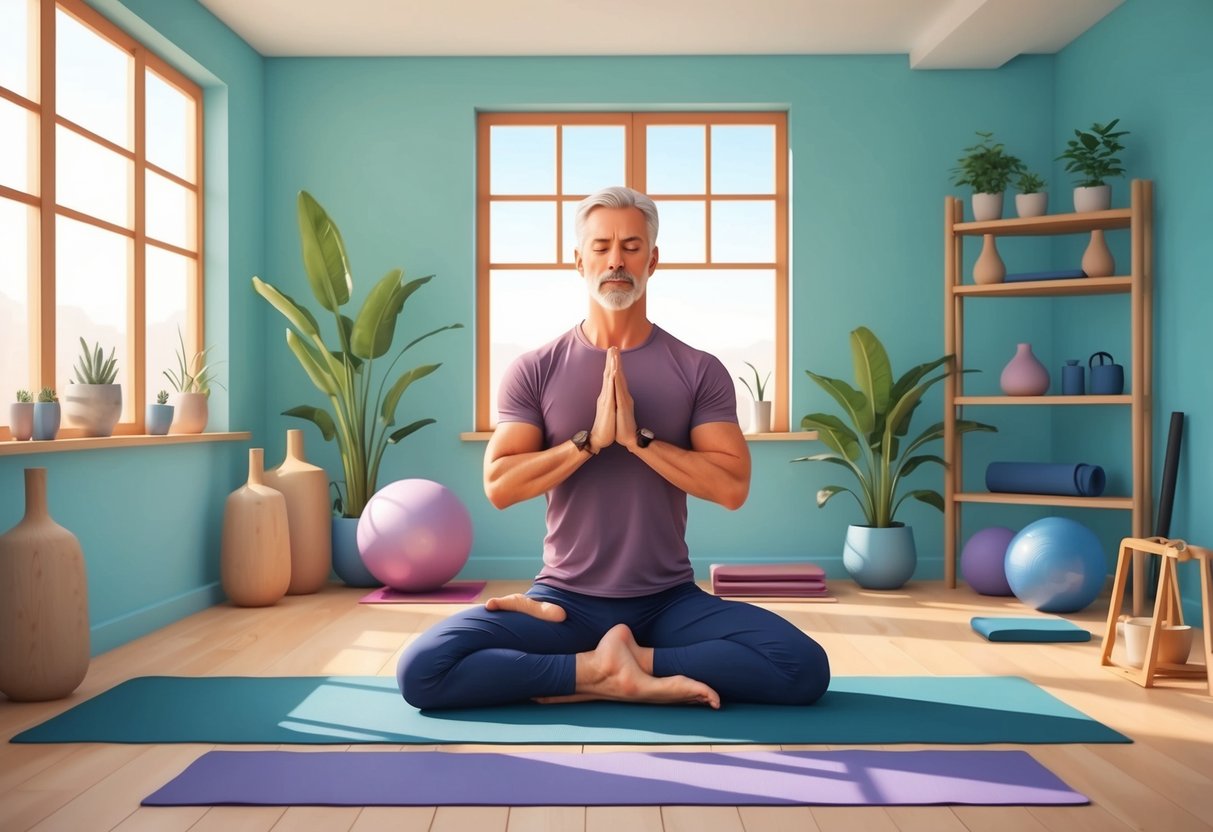
Yoga offers many benefits for men over 50. It can improve flexibility, strength, and balance. Let’s explore some key poses and breathing techniques to get you started.
related Posts
10 Great Benefits From Gardening For Baby Boomers
5 Great Benefits of Sunflower Seeds For Boomers
Common Beginner Poses and Alignments
Cat and Cow poses are great for warming up your spine. Start on hands and knees. As you inhale, arch your back and look up (Cow). As you exhale, round your spine and tuck your chin (Cat).
Mountain Pose helps with posture. Stand tall with feet hip-width apart. Roll your shoulders back and down. Engage your core and breathe deeply.
Try Warrior I for leg strength. Step one foot back, bend your front knee, and raise your arms overhead. Keep your hips facing forward.
Child’s Pose is perfect for relaxation. Kneel on the floor, sit back on your heels, and stretch your arms forward.
Remember, good form is key. Don’t push too hard. Listen to your body and modify poses as needed.
Breathing Exercises and Body Awareness
Breathing is crucial in yoga. Try this simple exercise: Sit comfortably and close your eyes. Breathe in slowly through your nose for 4 counts. Hold for 2 counts. Exhale for 6 counts.
Body awareness helps prevent injury. As you practice, pay attention to how each pose feels. Notice areas of tension or discomfort.
Try a body scan: Lie on your back. Focus on each part of your body, starting from your toes and moving up. Relax each area as you go.
Remember, yoga isn’t about perfection. It’s about connecting with your body and breath. Take it slow and enjoy the journey.
Building Strength and Muscle Mass After 50
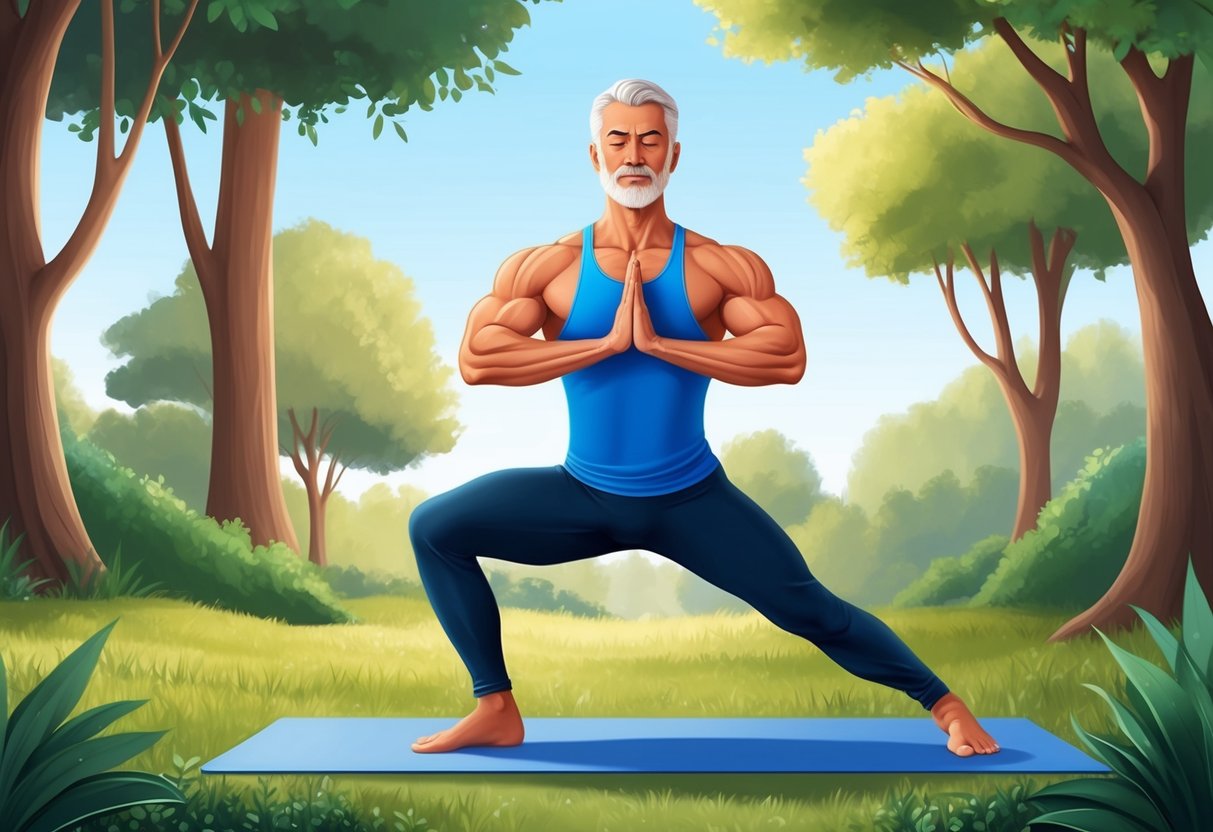
Men over 50 can still build strength and muscle mass through smart training. Combining yoga with targeted exercises helps improve overall fitness and body composition.
Integrating Yoga with Strength Training
Yoga and strength training work well together for men over 50. Start with 2-3 strength sessions per week. Add yoga on rest days or after workouts.
Try these yoga poses to support your strength training:
- Warrior poses for leg strength
- Plank for core stability
- Chaturanga for upper body
Lifting weights is key for muscle growth. Focus on compound moves like:
- Squats
- Deadlifts
- Bench press
Use moderate weights and aim for 8-12 reps per set. This range helps build muscle safely.
Targeting the Core and Upper Body
A strong core and upper body are vital for overall fitness. Yoga can help build muscle density in these areas.
For core strength, try:
- Boat pose
- Side plank
- Bicycle crunches
Upper body yoga moves:
- Downward dog push-ups
- Crow pose
- Dolphin pose
Add weights to boost muscle growth:
- Dumbbell rows for back
- Shoulder presses
- Bicep curls
Start with 2-3 sets of each exercise. Listen to your body and increase slowly. Rest between workouts to allow muscles to recover and grow.
Focusing on Heart Health and Cardiovascular Exercises
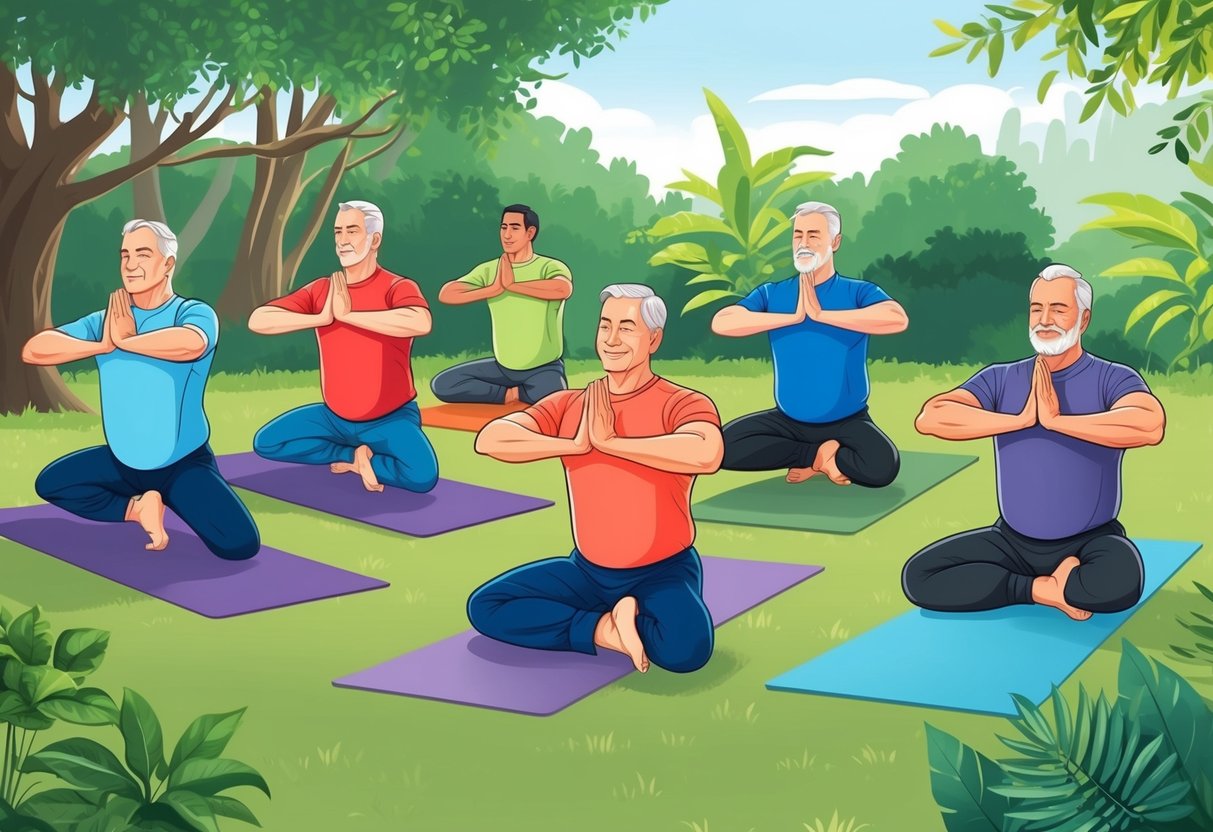
Yoga can boost your heart health and improve blood flow. It’s a great way to manage blood pressure and reduce the risk of heart disease.
Yoga Workouts to Elevate Heart Rate
To get your heart pumping, try more active yoga styles. Vinyasa or power yoga can increase your heart rate by 50 to 60%. These styles keep you moving, linking breath with movement.
Start with Sun Salutations. They warm up your body and get your blood flowing. Do 5-10 rounds, moving at a steady pace.
Add standing poses like Warrior I, II, and III. Hold each for 5-10 breaths. These poses work large muscle groups, making your heart work harder.
Try flowing sequences. Move from Plank to Chaturanga to Upward Dog and back to Downward Dog. Repeat 5-10 times.
Remember to listen to your body. Take breaks if you need them. Drink water to stay hydrated.
Managing Blood Pressure Through Yoga
Gentle yoga can help lower your blood pressure. It calms your nervous system and reduces stress.
Start with deep belly breathing. Lie on your back, hands on your stomach. Breathe deeply, feeling your belly rise and fall. Do this for 5-10 minutes.
Try restorative poses. Legs Up the Wall is great for circulation. Sit sideways against a wall, then swing your legs up. Stay for 5-10 minutes.
Practice forward folds. They can lower blood pressure. Try a seated forward bend. Sit with legs straight, bend forward from your hips.
End with Savasana. Lie flat on your back, arms and legs relaxed. This pose helps your whole body unwind.
Addressing Joint Health and Mobility Concerns
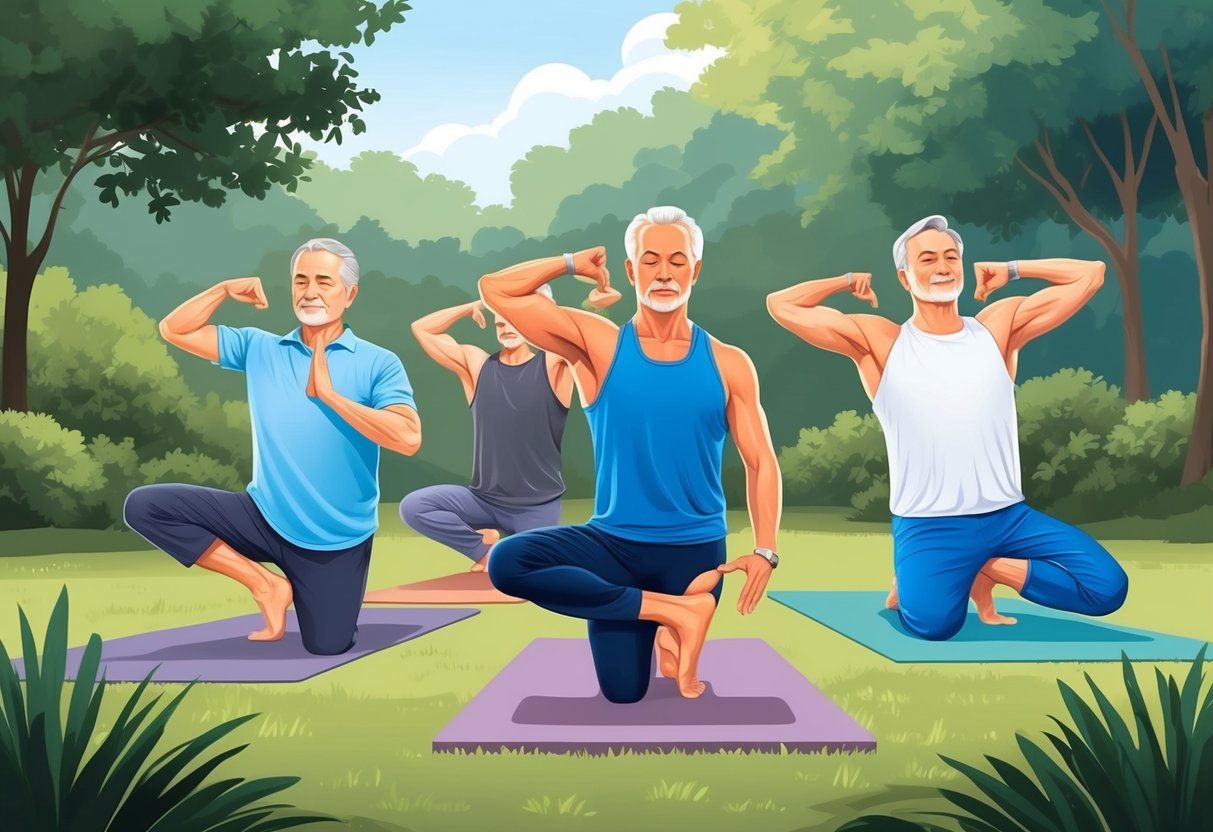
Yoga can help improve joint health and mobility for men over 50. It’s important to focus on gentle movements and proper alignment to protect sensitive areas like knees, hips, and the lower back.
Yoga for Healthy Knees and Lower Back
Start with simple poses to strengthen your knees and lower back. Try the Mountain Pose to improve posture and balance. Stand tall with your feet hip-width apart and engage your leg muscles.
For your lower back, try Cat-Cow stretches. Get on your hands and knees, then arch and round your back slowly. This helps increase spine flexibility and eases tension.
The Child’s Pose is great for both knees and back. Kneel on the floor, sit back on your heels, and stretch your arms forward. This gentle stretch can relieve pain and improve flexibility.
Remember to listen to your body. If something hurts, stop and adjust the pose.
Modifications for Sensitive Joints
You can modify many yoga poses to suit your needs. For example, if standing poses bother your knees, try them while sitting in a chair.
Use props like blocks or straps to make poses more comfortable. A block under your hand in Triangle Pose can help if you can’t reach the floor.
Yoga for older men isn’t about extreme flexibility. Focus on gentle stretches and breathing exercises. These can improve your range of motion without straining your joints.
For tight hip flexors, try a modified Low Lunge. Keep your back knee on the ground and use a cushion for support if needed.
Always warm up before your practice. This helps prepare your joints and muscles for movement.
Losing Weight Through Yoga: A Sustainable Approach
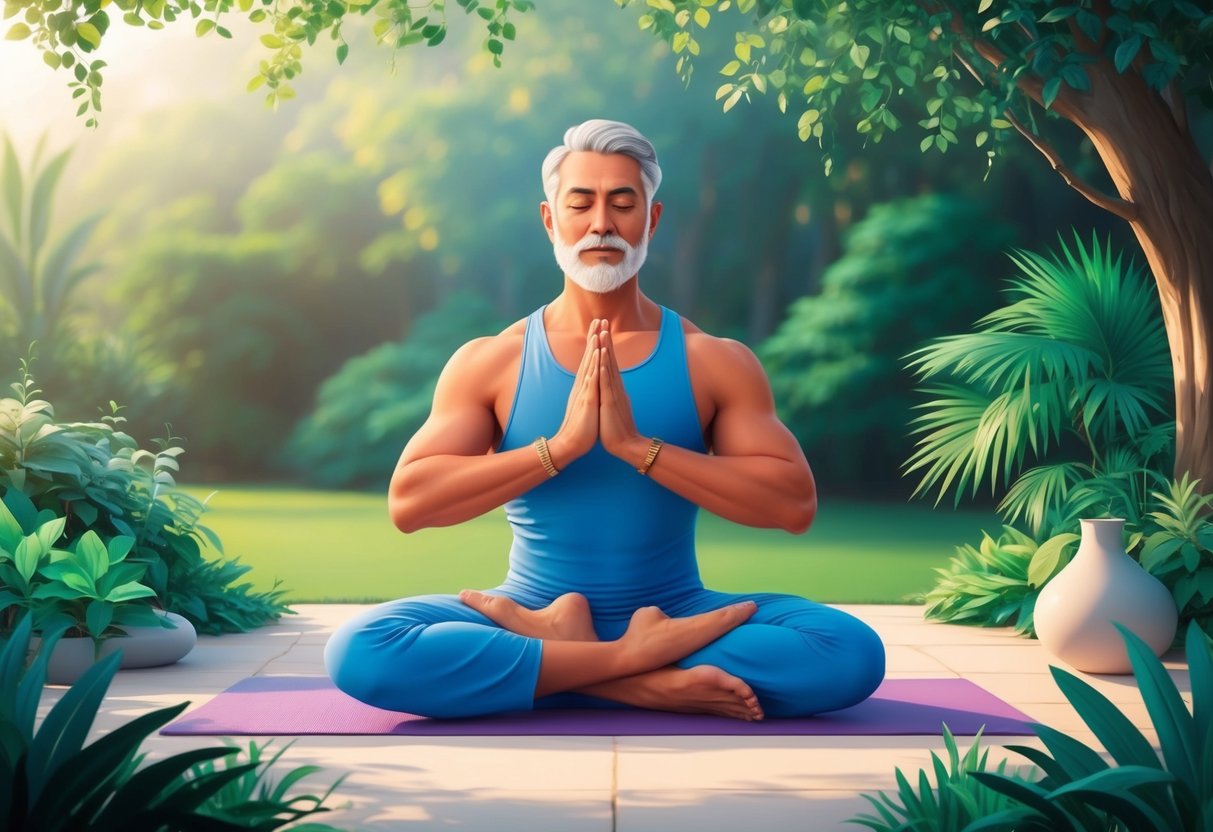
Yoga can be a gentle yet effective way to shed extra pounds. It helps you build strength, flexibility, and mindfulness while burning calories. Let’s explore how to combine yoga with healthy eating and which poses can boost your weight loss efforts.
Combining Yoga with a Healthy Diet
To lose weight with yoga, pair your practice with good nutrition. Eat plenty of fruits, vegetables, and lean proteins. Drink water before and after your sessions to stay hydrated. Try to cut back on processed foods and sugary drinks.
Plan your meals around your yoga schedule. Eat light before practice to avoid discomfort. After class, have a balanced meal to refuel your body.
Keep a food diary to track what you eat. This can help you spot areas for improvement. Remember, weight loss happens when you burn more calories than you take in.
Yoga Poses for Weight Loss
Certain yoga styles can really get your heart pumping. Power Yoga and Vinyasa flow are great for burning calories. These dynamic practices keep you moving and challenge your muscles.
Try these poses to boost your weight loss:
- Warrior II: Builds leg strength and stamina
- Plank: Works your core and upper body
- Chair Pose: Tones your thighs and glutes
- Sun Salutations: Warms up your whole body
Aim for at least 150 minutes of yoga per week to see results. Start with shorter sessions and gradually increase your practice time. Be patient with yourself and enjoy the journey to a healthier you.
Yoga for Longevity: Staying Consistent and Safe
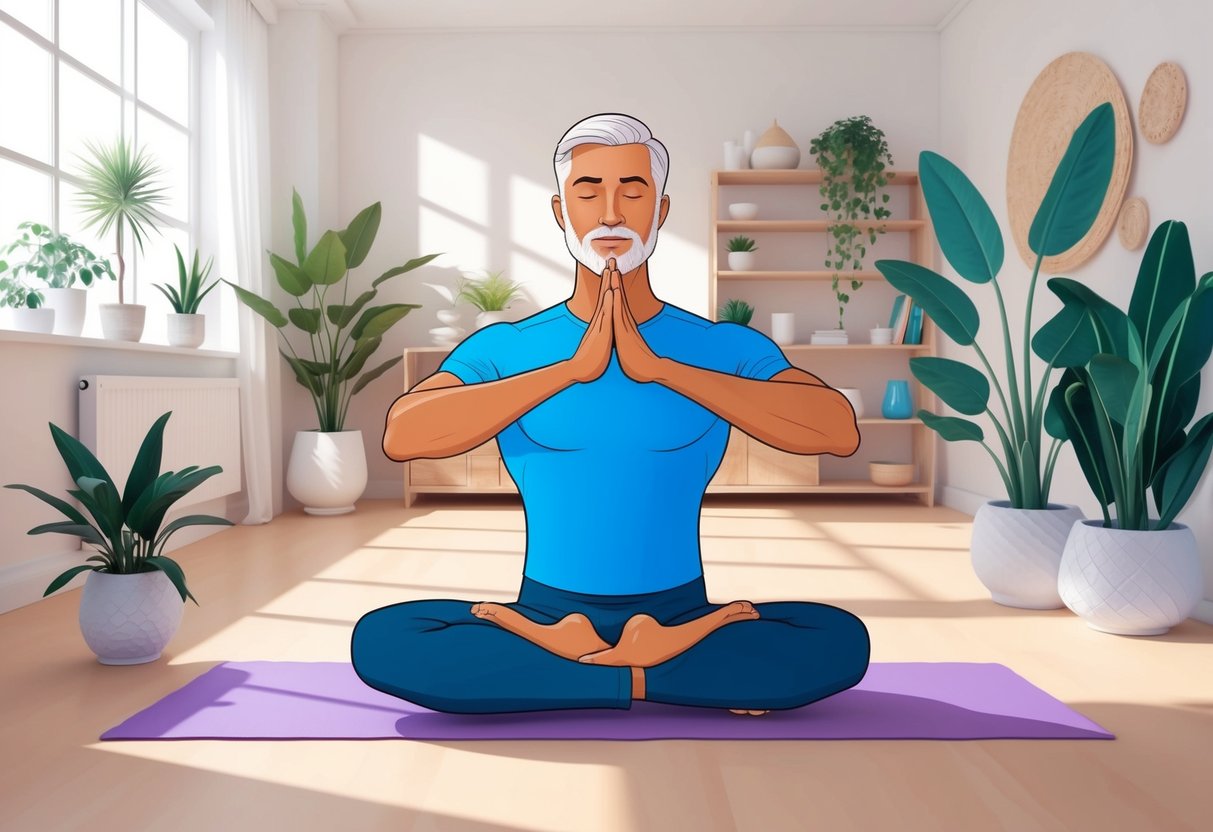
A regular yoga practice can boost your health as you age. You’ll see the best results by sticking to a routine and getting expert guidance.
Developing a Regular Yoga Practice
Set specific goals for your yoga journey. This might include improving flexibility, building strength, or reducing stress. Start with short sessions and gradually increase the time.
Choose a consistent time and place for your practice. This helps make yoga a habit. You might prefer mornings to energize your day or evenings to unwind.
Mix up your routine to keep it interesting. Try different yoga poses like deep squats, gentle twists, or chair poses. These can improve your overall fitness and flexibility.
Remember to listen to your body. If something doesn’t feel right, back off or modify the pose. Consistency matters more than perfection.
Working with a Physical Therapist or Instructor
Find a certified yoga instructor who has experience working with older adults. They can teach you proper form and suggest modifications for your needs.
Consider working with a physical therapist, especially if you have any health concerns. They can create a safe yoga plan tailored to your body.
Your instructor can help you avoid common mistakes and reduce injury risk. They’ll teach you how to use props like chairs or blocks for support.
Don’t be shy about asking questions. A good instructor will gladly explain poses and offer alternatives. Regular check-ins can help you track your progress and adjust your practice as needed.
Yoga Equipment and Accessories for Optimal Practice
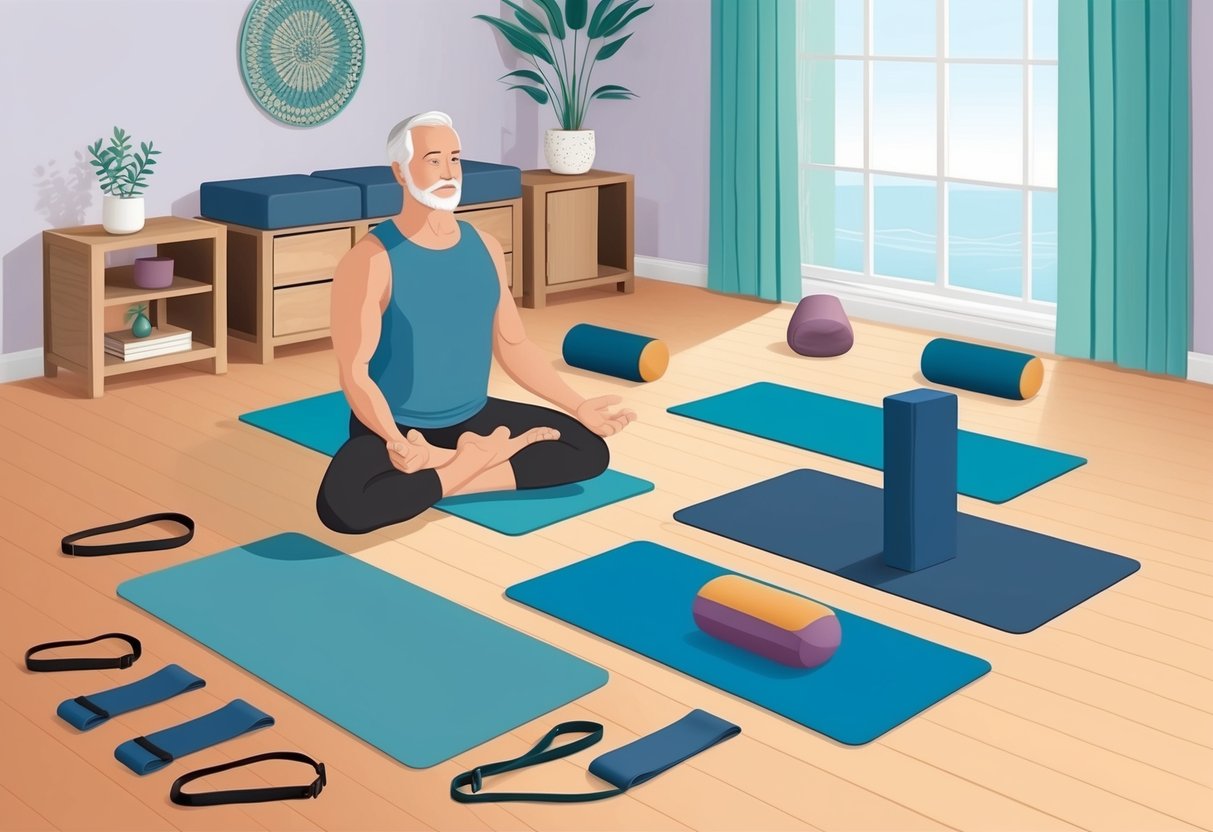
The right gear can make a big difference in your yoga practice. Good equipment helps you stay safe and comfortable as you move through poses.
Choosing the Best Yoga Mats and Props
When picking a yoga mat, look for one that’s thick enough to cushion your joints. The Manduka PRO yoga mat is a top choice. It’s 6mm thick and has a non-slip surface to keep you steady.
Yoga blocks are handy tools for many poses. They give you extra reach and support. Cork blocks are sturdy and eco-friendly. Foam blocks are lighter and cheaper.
Don’t forget a yoga strap. It helps you stretch deeper in poses. A cotton yoga strap is comfy to hold and easy to clean.
For hot yoga, grab a non-slip towel. It soaks up sweat and stops you from sliding. The Yogitoes towel by Manduka is a popular pick.
A bolster pillow supports you in restorative poses. It eases pressure on your spine and hips. Choose one that’s firm but comfy.
Integrating Yoga into Your Daily Routine for Maximum Benefit
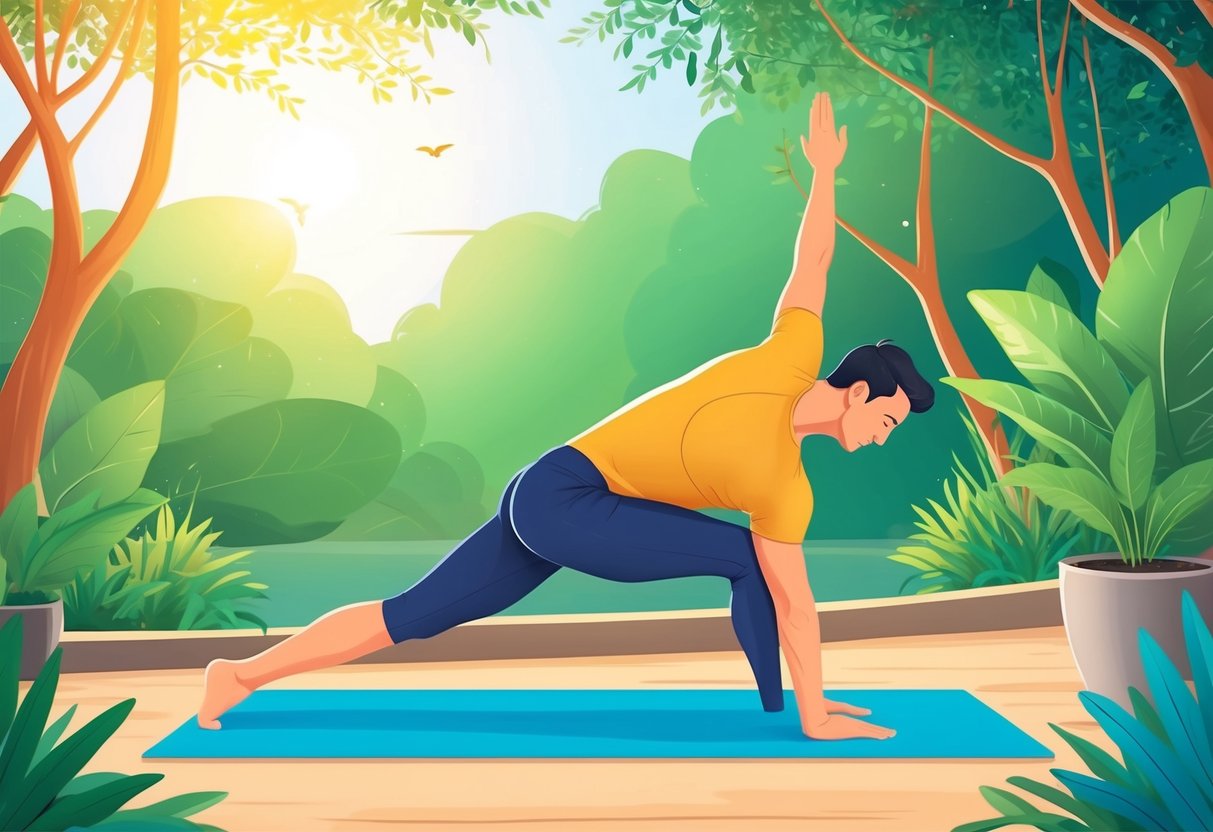
Adding yoga to your daily life can boost your health and well-being. It’s easy to start and can fit into even the busiest schedules.
Creating a Yoga Workout Program
Start by choosing yoga styles that suit your needs. Gentle forms like Hatha or Yin yoga are great for beginners. Mix in some stronger styles like Vinyasa as you get stronger.
Pick a time of day that works best for you. Many find mornings ideal, but evenings can be good too. Aim for at least 15-30 minutes per session.
Include a mix of poses:
- Standing poses for strength
- Seated poses for flexibility
- Balance poses for stability
- Breathing exercises for relaxation
Start with simple poses and gradually add more challenging ones. Listen to your body and don’t push too hard.
The Importance of Consistency and Routine
Regular practice is key to seeing benefits from yoga. Try to practice at the same time each day to build a habit.
Set realistic goals. It’s better to do 10 minutes daily than an hour once a week. Use a calendar or app to track your progress.
Don’t worry if you miss a day. Just get back on track the next day. Remember, yoga is a journey, not a race.
Take short yoga breaks during your day. A few stretches or breathing exercises can help refresh you.
Join a class or find an online community for support and motivation. Sharing your journey can make it more enjoyable and help you stay committed.
Advanced Practices and Yoga Challenges for Experienced Yogis
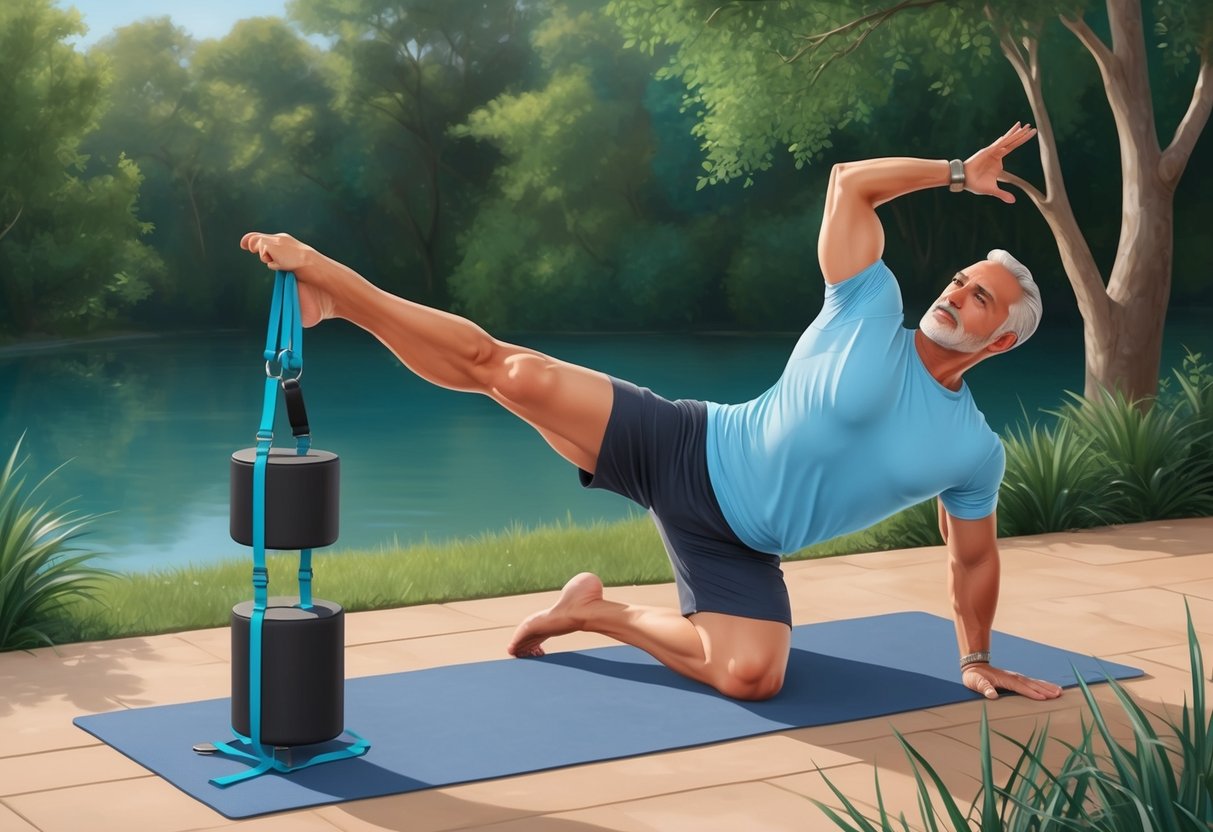
You’ve mastered the basics and now it’s time to take your yoga practice to the next level. These advanced techniques will push your limits and help you grow as a yogi.
Incorporating Inversions and Advanced Poses
Inversions like shoulder stands can be a great addition to your routine. They improve balance and circulation. Start with supported headstands against a wall. Work up to freestanding headstands and handstands.
Try crow pose to build arm strength. Practice slowly and use a cushion for safety. Advanced balancing poses like bird of paradise will test your flexibility and focus.
Remember to warm up properly before attempting these poses. Listen to your body and don’t push too hard. It’s okay to use props or modifications as needed.
Exploring Hot Yoga and Other Intense Forms
Hot yoga can be a good challenge for experienced yogis. The heat allows for deeper stretches and detoxification. Start with shorter classes and stay hydrated.
Power yoga and Ashtanga are other intense styles to try. They build strength and stamina through flowing sequences. These classes move quickly, so familiarity with poses is important.
Yoga challenges, like 30-day programs, can boost your motivation. They help you stay consistent and see progress. Choose a challenge that fits your schedule and goals.
Frequently Asked Questions
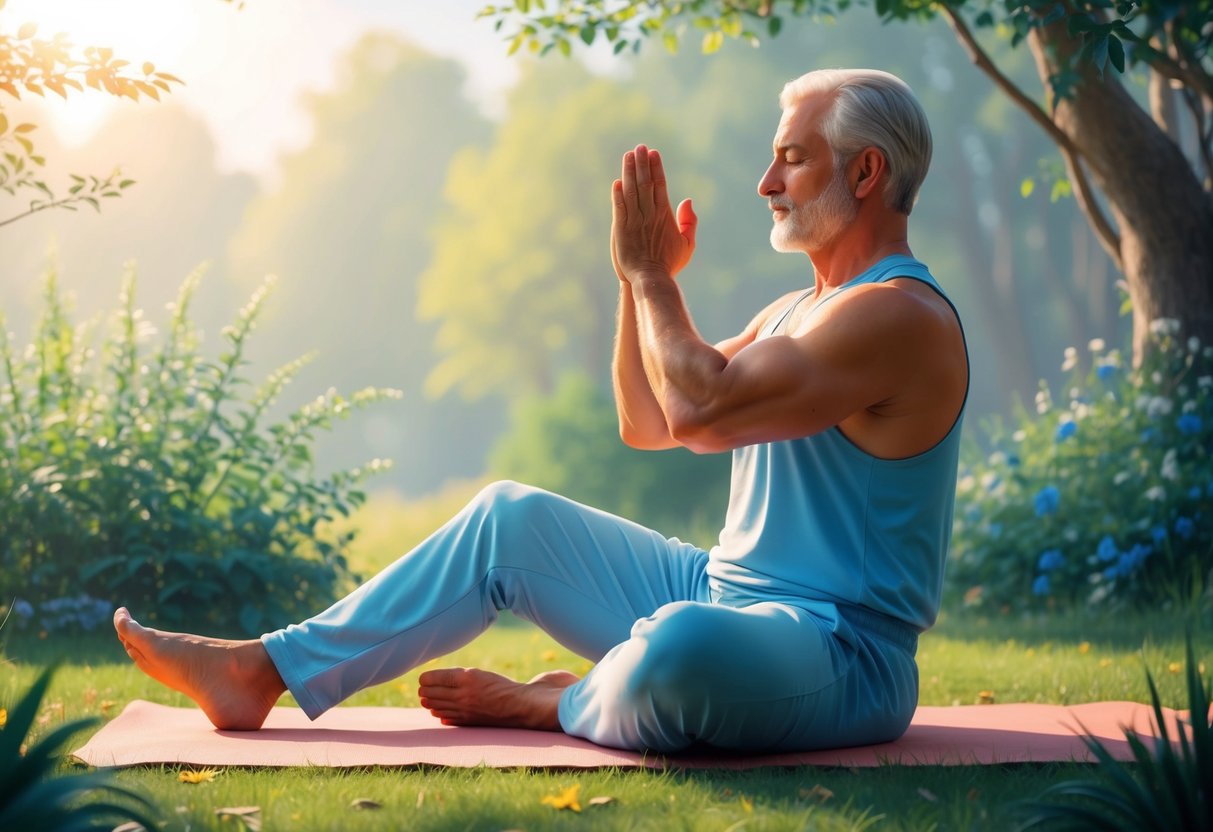
Yoga can be a great workout for men over 50. It helps with flexibility, strength, and stress relief. Many guys have questions about getting started and what to expect.
What are some recommended yoga workouts for beginners over 50?
Start with gentle yoga styles like Hatha or Yin. These focus on basic poses and breathing. Try simple poses like Mountain Pose, Cat-Cow stretches, and Child’s Pose.
Take it slow and listen to your body. Use props like blocks or straps if needed.
Can yoga practice improve testosterone levels in men over 50?
Some yoga poses may help boost testosterone. Poses that engage large muscle groups could have this effect.
Sun Salutations and Warrior poses are good options to try. Regular practice may help, but more research is needed.
How frequently should men over 50 engage in yoga for optimal benefits?
Aim for 2-3 yoga sessions per week. This gives your body time to recover between workouts.
Even 15-20 minutes a day can be helpful. Consistency is key for seeing results.
Which type of yoga is most suitable for men who are just starting out?
Hatha yoga is great for beginners. It teaches basic poses and breathing techniques.
Restorative yoga is another good option. It uses props to support your body in relaxing poses.
Are there specialized yoga classes for males above 60 years of age?
Many studios offer yoga classes for seniors or active older adults. These classes focus on gentle movements and balance.
Look for “Chair Yoga” or “Silver Yoga” classes. They’re designed for older adults with limited mobility.
What are the benefits of yoga for men in their senior years?
Yoga can improve flexibility, balance, and strength. This helps prevent falls and injuries.
It may also reduce stress and anxiety. Yoga can boost your mood and help you sleep better.


